

Poynting Marine Antennas 4G/5G, Wi-Fi and GNSS for Boats,
Yachts and Vessels
Poynting marine antennas are rugged omnidirectional antennas built for 4G/5G, Wi-Fi and GNSS connectivity on boats, yachts and ships. They keep the connection going as the vessel changes heading and moves with the waves.
- 2×2 · 4×4 · 8 ports
- 617–7200 MHz
- Cellular + Wi-Fi + GNSS
- IP68 – IP69K
- CPE with router enclosure
How to choose Poynting marine antennas
Gain alone does not decide the choice. The router's MIMO configuration, frequency bands, cable length, mounting height and the vessel's distance from shore must be considered together.
Small boat, coastal cruising. PUCK-2, PUCK-5 or OMNI-402-5G with a two-port router.
Yacht with a single 4×4 router. SWIRL-4 or MIMO-4: cellular, Wi-Fi and GNSS in one housing.
Dual-modem router, two carriers. SWIRL-8: 2 × 4×4 cellular, 4× Wi-Fi, GNSS.
Cruising further offshore. Narwhal OMNI-902/904/914: high-gain cellular up to 8 dBi.
Long cable runs. SWIRL-CPE or EPNT-4: the router sits in the antenna housing and only Ethernet runs inside.
Superyachts and commercial ships. RIPPLE-8/16 and WaveHunter: 2, 4 or 6 routers.
What you need to know about 4G/5G at sea
 Is a high-gain antenna always better? (video)
 5 tips for antenna selection and installation
 Poynting marine antenna selection guide
 Correct antenna installation and practical tips
 Lightning protection for boats
On coverage and signal range at sea: 4G/5G coverage at sea, signal range at sea and the Fresnel zone.
Poynting antennas for harsh marine conditions
Combination marine antennas Cellular + Wi-Fi + GNSS
4G/5G, Wi-Fi and positioning in a single housing. One hole, one installation; the most common choice for yachts and boats.
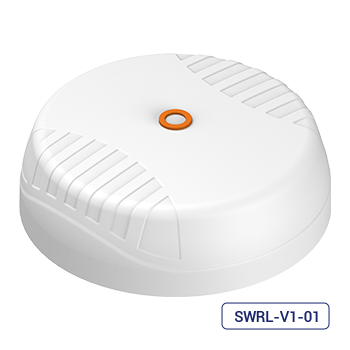
SWIRL-8
For a router with two cellular modules, or for two routers.
- 8× cellular · 4× Wi-Fi · GNSS L1/L5
- 617–6000 MHz · 6 dBi
SWIRL-4
For a 4×4 router with a single cellular module.
- 4× cellular · 4× Wi-Fi · GNSS L1/L5
- 617–6000 MHz · 6 dBi

SWIRL-8-CPE
The router sits inside the antenna housing; only Ethernet runs inside.
- 8× cellular · 4× Wi-Fi · GNSS
- 617–6000 MHz · 6 dBi
SWIRL-4-CPE
For router-integrated, single-module systems.
- 4× cellular · 2× Wi-Fi · GNSS
- 617–6000 MHz · 6 dBi

EPNT-4
With router enclosure, for coastal use.
- 4× cellular · 4× Wi-Fi · GNSS
- 617–4200 MHz · 3 dBi

Superyachts and commercial ships Multiple routers
Highest-capacity systems using several routers and carriers at the same time.
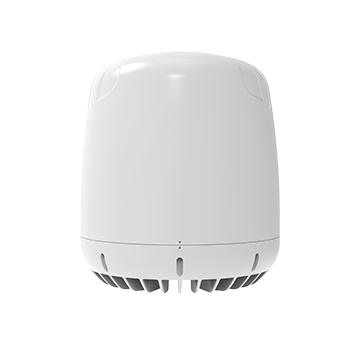
WaveHunter™
X-pol high-gain antenna system for six routers.
- 6× (4×4) cellular · 4× Wi-Fi · 2× GNSS
- 617–960 / 1710–4200 MHz · 11 dBi
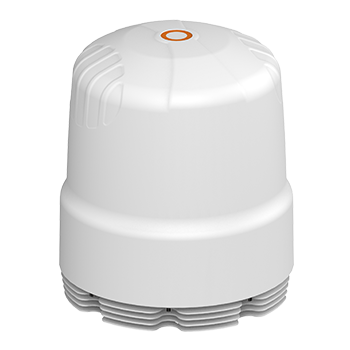
RIPPLE-16
Multi-port antenna for four routers.
- 4× (4×4) cellular · 4× Wi-Fi · 2× GNSS
- 617–7200 MHz · 9.5 dBi
RIPPLE-8
Multi-port antenna for two routers.
- 2× (4×4) cellular · 4× Wi-Fi · 2× GNSS
- 617–7200 MHz · 9.5 dBi

High-gain cellular antennas Narwhal and OMNI
High-gain, IP68 omnidirectional cellular antennas for boats heading further from shore.

OMNI-914
Narwhal 4×4 with four high-gain elements.
- 617–4200 MHz
- 4 × 8 dBi · IP68
OMNI-904
Narwhal 4×4 with two low-gain and two high-gain elements.
- 617–4200 MHz
- 3 and 8 dBi · IP68


Marine Wi-Fi antennas Marina and harbour Wi-Fi
For picking up the marina's Wi-Fi network from a distance or distributing Wi-Fi on deck.

OMNI-496
Wi-Fi 6E/7, long range.
- 2.4 / 3.3–4.2 / 4.9–7.2 GHz
- Up to 10 dBi · IP68


OMNI-494
X-pol 4×4 MIMO Wi-Fi 6E.
- 2.4 / 4.9–7.2 GHz
- 9.8 dBi vertical · 4.5 dBi horizontal
Compact antennas Small boats
Low-profile, IP69K PUCK antennas for small boats, coastal and inland waters.
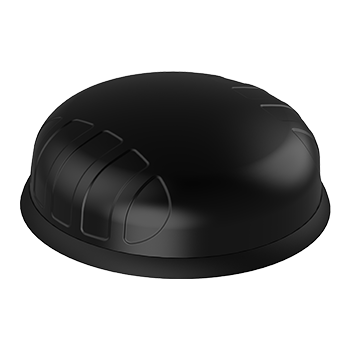
PUCK-5
2×2 cellular + 2×2 Wi-Fi + GNSS.
- 617–6000 MHz · 6.5 dBi
- Wi-Fi 6 dBi · IP69K
Correct installation on board
Height
The higher the antenna, the further the radio horizon; a mast or radar arch is preferred.
Away from radar
Mount outside the radar beam plane, at a suitable distance from other RF antennas and large metal structures.
Short cable or CPE
Coaxial loss grows over long runs; move the router closer to the antenna or choose a CPE model.
Port mapping
Connect the cellular, Wi-Fi and GNSS cables to the correct router inputs and use all MIMO ports.
Sealing
Protect connectors against salt water with sealing tape; an IP68–IP69K housing does not protect the connection points.
Lightning protection
Grounding and a lightning arrestor on every cable. More: Poynting lightning arrestor.
About Poynting marine antennas
Does a Poynting marine antenna improve boat internet?
Yes. Placing the antenna outside the vessel, in a clear and suitably high position, gives a stronger and more stable signal than the router's internal antennas inside the hull. Results depend on the distance to the shore base station, network load, frequency and router capabilities.
How do I choose a 2×2, 4×4 or 8-port antenna for a boat?
The antenna's MIMO configuration should match the router's cellular antenna ports: 2×2 for a two-port router, 4×4 for a four-port router. 8-port antennas are for dual-modem routers or two routers; each modem runs 4×4.
Is higher antenna gain always better on vessels?
No. High-gain omnidirectional antennas have a narrower vertical beamwidth. If the base station falls outside this narrow beam as the boat rolls and pitches, connection stability drops. Gain should be considered together with vessel motion, mounting height and distance from shore.
Does a marine antenna provide internet offshore?
A marine antenna receives the existing 4G/5G signal better, but it cannot create a connection where there is no terrestrial network. As you move away from shore, the connection weakens depending on base station coverage and frequency band. Voyages beyond coverage require a satellite connection.
Where should a marine antenna be mounted on a boat?
As high and clear as possible, at a suitable distance from radar, metal obstructions and other RF antennas. Large metal structures can distort the radiation pattern. The mounting position should be chosen together with the antenna's manual, the superstructure layout and the cable route.
Does marine antenna cable length affect performance?
Yes. Coaxial cable loss increases with length and frequency. Cables should be short and low-loss. CPE solutions, with the router in the antenna housing, eliminate this loss by using an Ethernet cable instead of a long RF cable.
Are Poynting marine antennas compatible with every 4G/5G router?
Check the router's supported bands, number of cellular ports, MIMO configuration and connector type. Even when the bands match, a wrong MIMO pairing or unsuitable adapters and cables will limit performance.
Read more
Antenna selection by application: small and medium yachts · large yachts · super and mega yachts · fishing and coast guard · cargo and shipping · offshore platforms · passenger and cruise ships · smart buoys and autonomous vessels
For product information, see also the official Poynting website.