
 SUPERYACHTS AND MEGAYACHTS
Superyacht Antenna: Multi-Modem 4G/5G Systems for Superyachts and Megayachts
On superyachts and megayachts, dozens of users, the crew network, cameras and navigation systems all need connectivity at the same time. At this scale a single router is not enough; systems with 4–6 modems, multi-port superyacht antennas and 5G + satellite bonding are designed together.
Connectivity Architecture on Superyachts
At superyacht scale, antenna selection is not a single product choice but a decision about the whole connectivity architecture.
Multiple modems
16 or 24 cellular ports usually means 4–6 4×4 modems. Each modem is mapped to its own antenna group.
Multiple operators and link bonding
SIMs from different operators are used at the same time; links are bonded with SD-WAN or SpeedFusion to increase capacity and continuity.
Satellite integration
Further offshore, Starlink or OneWeb takes over. Cellular and satellite links are managed in a single network; see Peplink MAX Orbit.
16- and 24-Port Systems
A superyacht antenna must match the total number of cellular ports on the router or router group.
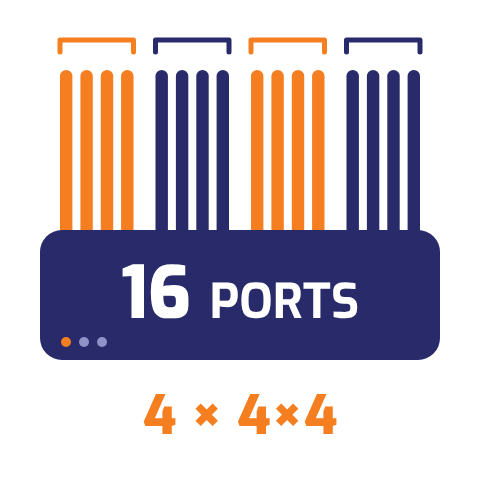
16 ports
4 × 4×4 modems. RIPPLE-16 in a single housing, or one 4×4 antenna per modem.
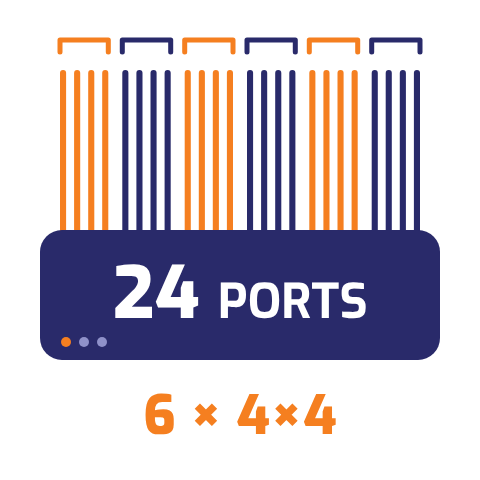
24 ports
6 × 4×4 modems. WaveHunter's 6-direction 4×4 structure, or antenna groups per modem.
Where Will the Router Be: Technical Room or Inside the Antenna?
On superyachts the cable route between the antenna mast and the technical room is long; the location of the routers is therefore decided before the antenna.
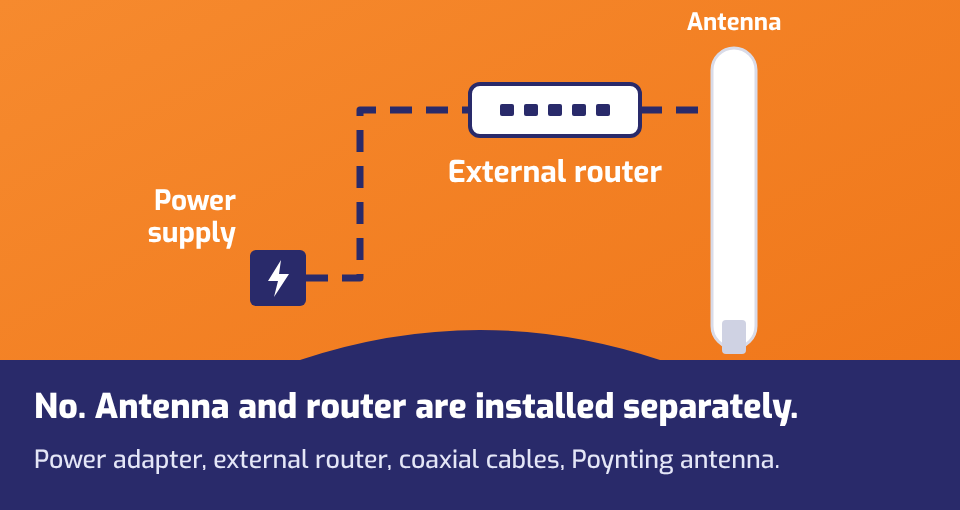
Routers in the technical room
Modems are managed centrally indoors, with easy maintenance and SIM access. Each modem needs its own coaxial cable group; cable length and loss are the most critical part of the design.
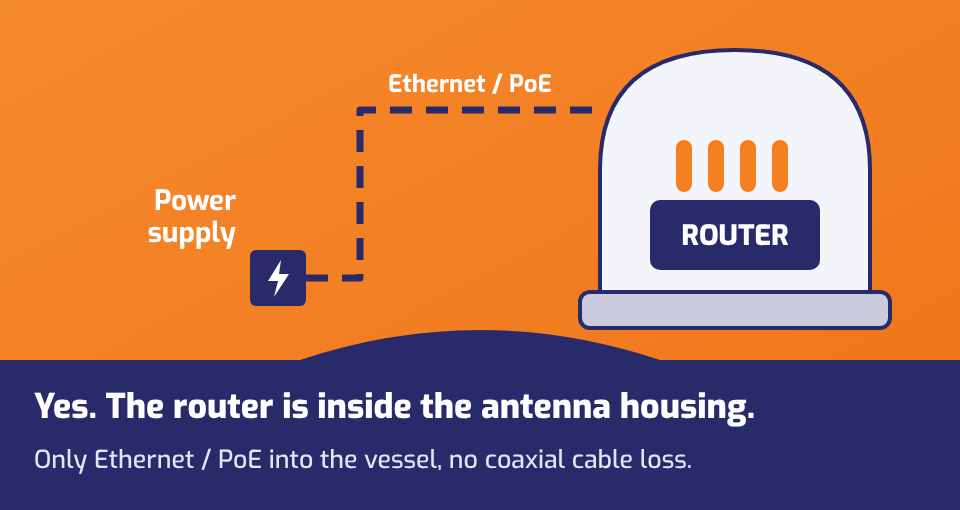
Routers in the antenna housing
Routers are placed inside multi-port housings such as RIPPLE; only Ethernet / PoE runs into the yacht. RF cable loss is practically eliminated, and remote SIM management becomes important.
Recommended Antennas for Superyachts
There are two approaches: multi-port antennas that bring all ports together in one housing, or a separate 4×4 antenna for each modem. Values are taken from the manufacturer's datasheets.
Many ports in a single housing
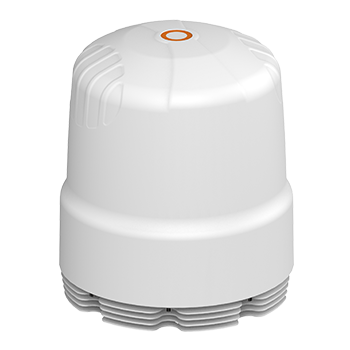
RIPPLE-16
- Frequency617–7200 MHz
- Gain9.5 dBi (LTE)
- Cellular16 ports
- Extra portsWi-Fi 8.5 dBi · GNSS
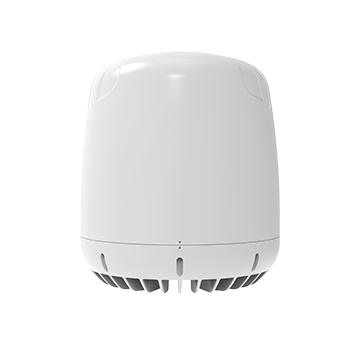
WaveHunter
- Frequency617–4200 MHz
- Gain11 dBi (LTE)
- Cellular6 × 4×4 (24 ports)
- Extra portsWi-Fi 7.5 dBi · GNSS
RIPPLE-8
- Frequency617–7200 MHz
- Gain9.5 dBi (LTE)
- Cellular8 ports
- UseAddition to RIPPLE-16 / backup group
A 4×4 antenna per modem, and Wi-Fi
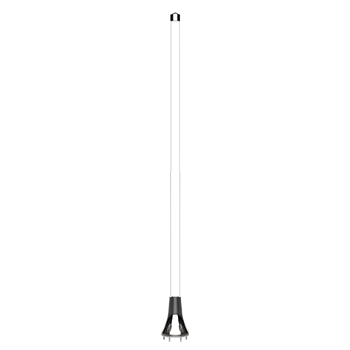
OMNI-0914 (Narwhal)
- Frequency617–4200 MHz
- Gain8 dBi (LTE)
- Cellular4 ports · 4×4
- UseOne antenna per modem
OMNI-0904 (Narwhal)
- Frequency617–4200 MHz
- Gain3.5 / 8 dBi (LTE)
- Cellular4 ports · 4×4
- UseOne antenna per modem

OMNI-494 · OMNI-498
- Frequency2400–7200 MHz
- Gain9.8 dBi (Wi-Fi)
- ConfigurationOMNI-498 2×2 · OMNI-494 4×4
- UseMarina Wi-Fi, Wi-Fi WAN
Placing Multiple Antennas
When a separate antenna is used for each modem, the position of the antennas relative to each other and to other RF equipment directly affects system performance.
- Leave sufficient separation between antennas connected to different modems, and maintain isolation between antennas operating in the same band.
- Place the antennas outside the radar beam and away from VHF antennas and the satellite terminal (Starlink, etc.).
- Label the cable of each antenna group separately and record the modem–port mapping in the installation documentation.
- If the cable route is long, placing the routers in the antenna housing (RIPPLE) is more efficient.
- Lightning arrestors on all antenna lines are recommended.
- More details: MIMO isolation · marine antenna installation · lightning protection for boats
Which Superyacht Antenna Is Right for You?
Single housing, long cable route
To bring a 4-modem system together in one housing and eliminate RF cable loss.
RIPPLE-16Offshore cruising, maximum capacity
For reaching distant base stations with a 6-direction 4×4 structure and high capacity in 6-modem systems.
WaveHunterModem group in the technical room
If the routers stay indoors, one 4×4 Narwhal antenna per modem; the number of antennas equals the number of modems.
OMNI-0914 · OMNI-0904Marina Wi-Fi and backup WAN
A separate marine Wi-Fi antenna to use marina Wi-Fi as an internet source in port.
OMNI-494 · OMNI-498Connectivity at Megayacht Scale
On megayachts the superyacht architecture stays the same, but every layer grows: more modems, multiple satellite terminals and segregated networks.
Multiple antenna groups
Systems above 24 ports use more than one WaveHunter or RIPPLE group; the antenna groups are placed on deck with sufficient separation from each other.
Multiple satellite terminals
Multiple Starlink or OneWeb terminals and the cellular links are bonded into a single SpeedFusion connection with multi-WAN devices such as Peplink MAX Orbit 8.
Guest, crew and operations networks
Guest internet, the crew network, navigation and camera systems run on separate networks with different priorities; operational traffic always has priority.
Mobile coverage in the cabins
For many cabins and decks, an iRepeater and LineAmp based Stella Doradus Marine cellular repeater system is designed separately from the internet infrastructure.
Superyacht Antenna Comparison
| Model | Frequency | Gain (LTE) | Cellular ports | Wi-Fi / GNSS | Router |
|---|---|---|---|---|---|
| RIPPLE-16 | 617–7200 MHz | 9.5 dBi | 16 | Yes | Inside the antenna |
| RIPPLE-8 | 617–7200 MHz | 9.5 dBi | 8 | Yes | Inside the antenna |
| WaveHunter | 617–4200 MHz | 11 dBi | 24 (6 × 4×4) | Yes | External |
| OMNI-0914 | 617–4200 MHz | 8 dBi | 4 (4×4) | – | External |
| OMNI-0904 | 617–4200 MHz | 3.5 / 8 dBi | 4 (4×4) | – | External |
Other Yacht Classes
For all yacht and commercial vessel applications, see the marine antenna selection guide.


Frequently Asked Questions About Superyacht Antennas
Why are multiple modems used on a superyacht?
What is the difference between RIPPLE-16 and WaveHunter?
Can 5G and Starlink be used together on a superyacht?
Will a superyacht antenna boost mobile phone signal in the cabins?
What is the difference between a superyacht and a megayacht antenna system?
Let's design the connectivity architecture for your superyacht or megayacht
Share your yacht length, number of modems and operators, satellite terminal and technical room location, and we will plan the antenna and router setup for you.