
 MARINE ANTENNA SELECTION GUIDE
Marine Antenna Selection: The Right Antenna for Your Vessel and Router
The right marine antenna depends on the size of the vessel, the number of antenna ports on the router, the cruising area and the mounting conditions. This guide brings together the selection criteria and the application pages for yachts and commercial vessels in one place.
6 Key Criteria for Marine Antenna Selection
Antenna gain alone is not decisive. A marine antenna should be evaluated as a system together with the router and the vessel structure.
Router and antenna port count
The antenna must match the router's MIMO configuration. Choose a 2×2 antenna for a 2-port router and a 4×4 antenna for a 4-port router; an 8-port dual-modem router is a 2 × 4×4 configuration.
Frequency bands
The antenna must cover the 4G/5G bands used by the operators in your cruising area. Low bands provide wider coverage further offshore.
Mounting location and height
Mount the antenna in an open position, as high as possible and away from metal structures. Antenna height directly determines the radio horizon and the reachable distance from shore.
Cable length and router location
Long coaxial cable cancels a significant part of the antenna gain, especially in 5G bands. Keep the cable short or place the router inside the antenna housing (CPE).
Wi-Fi and GNSS requirements
If marina Wi-Fi, navigation and position tracking are needed, multi-port combination antennas reduce the number of separate antennas and the clutter on deck.
Resistance to marine conditions
Salt water, UV, vibration and a wide temperature range call for a marine-grade housing, a suitable IP rating and stainless steel mounting hardware.
Poynting Marine Antennas by Router Port Count
The first step in marine antenna selection is the number of cellular antenna ports on the router. The table below groups the Poynting marine antenna families by router configuration.
| Router configuration | Poynting marine antenna | Typical use |
|---|---|---|
| 2 ports (2×2 MIMO) | OMNI-402 · OMNI-0902 (Narwhal 2×2) | Small boats, compact single-modem routers |
| 4 ports (4×4 MIMO) | OMNI-414 · OMNI-0904 · OMNI-0914 · SWIRL-4 | Medium and large yachts, 4×4 MIMO 5G routers |
| 8 ports (2 × 4×4, dual modem) | SWIRL-8 · RIPPLE-8 | Superyachts, systems using two operators simultaneously |
| 16 ports (multi-modem) | RIPPLE-16 | Multi-modem systems on megayachts and commercial ships |
| Long range / high capacity | WaveHunter | Offshore cruising, vessels requiring high data capacity |
| Router inside the antenna (CPE) | SWIRL-4-CPE · SWIRL-8-CPE | Eliminating cable loss; only Ethernet / PoE runs into the vessel |
| Wi-Fi (marina, shore) | OMNI-494 · OMNI-496 · OMNI-498 | Connecting to marina Wi-Fi, Wi-Fi WAN |
| GNSS | Harxon GPS/GNSS antennas | Navigation, positioning and time synchronisation |
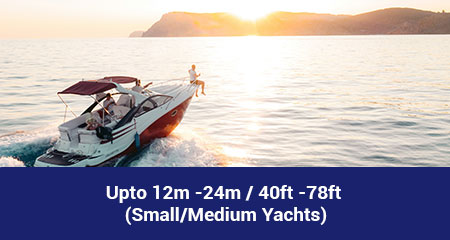
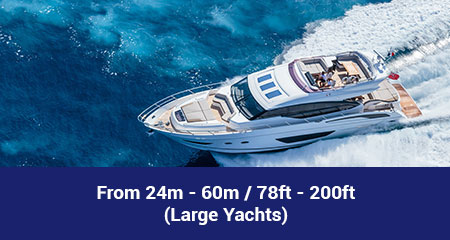
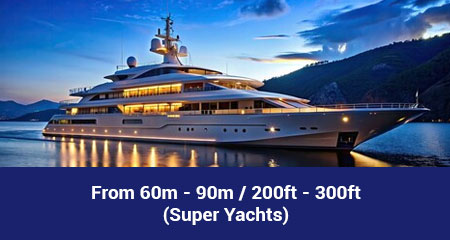
Marine Antenna Selection for Yachts
As the length of the yacht increases, so do the number of users, the number of modems and the space available for antenna installation. The application pages give antenna and router recommendations for each yacht class.
Marine Antenna Selection for Commercial Vessels and Platforms
For commercial vessels operating from inland waters to the open sea, antenna selection depends on operating hours, distance from shore, the number of connected devices and whether the system is mission-critical.

Fishing and Coast Guard
Rugged design for harsh conditions, stable connectivity far from shore.
Learn more →
Cargo and Merchant Shipping
Operational data and crew internet in port and coastal voyages.
Learn more →
Offshore Platforms
Long-range, high-capacity connectivity on fixed platforms.
Learn more →
Passenger and Cruise Ships
Multi-modem, high-capacity systems for large numbers of users.
Learn more →
Smart Buoys
Compact antennas for low-power IoT and sensor data.
Learn more →
Autonomous Vessels and Robotic Systems
Compact PUCK and router-housing SWIRL-CPE solutions for unmanned surface vehicles (USV).
Learn more →After Selection: Technical Guides
Once the antenna is selected, propagation conditions at sea, installation and protection determine the real performance of the system.
Frequently Asked Questions About Marine Antenna Selection
Is a higher-gain marine antenna always better?
My router has 4 ports; can I use a 2-port marine antenna?
What is the advantage of placing the router inside the antenna housing?
How far from shore can a marine antenna maintain a connection?
Let's choose the right marine antenna for your vessel
Share your vessel type, router model and cruising area, and we will define the Poynting marine antenna and system architecture for you. For all boat internet components, see our boat internet solutions.