
 LARGE YACHTS
Yacht Antenna: Multi-Port Poynting Marine Antennas for Large Yachts
On large yachts, the number of users, connected devices and capacity demand all increase. The right yacht antenna is chosen according to whether the router sits in the technical room or inside the antenna, the number of modems and ports, and the need for Wi-Fi and GNSS.
Where Will the Router Be: Technical Room or Inside the Antenna?
On large yachts, the distance between the antenna and the technical room is long. The first decision is therefore the location of the router; the antenna model follows from that decision.
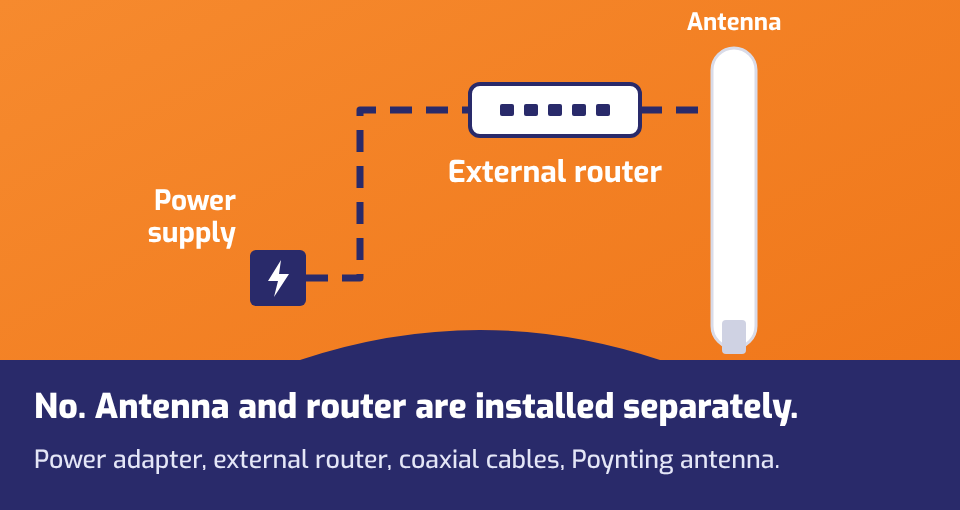
Router in the technical room
The router sits indoors next to the power and network infrastructure, and the antenna is connected by coaxial cables. Maintenance and SIM access are easy, but losses increase with cable length, especially in 5G bands. Low-loss cable and a short cable route are essential.
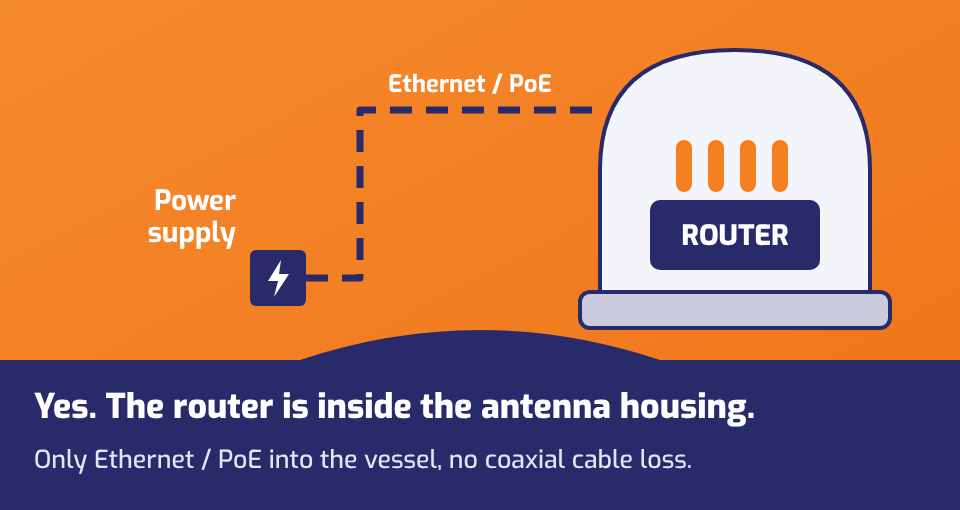
Router inside the antenna housing
The router is placed in the outdoor housing together with the antenna, and only an Ethernet / PoE cable runs into the yacht. RF cable loss is practically eliminated. As SIM access is limited, eSIM, remote SIM management or SIM Injector support becomes important.
Modem and Antenna Port Count
A yacht antenna must match the total number of cellular ports on the router. As the port count rises, the number of modems usually rises too; the MIMO order stays the same.
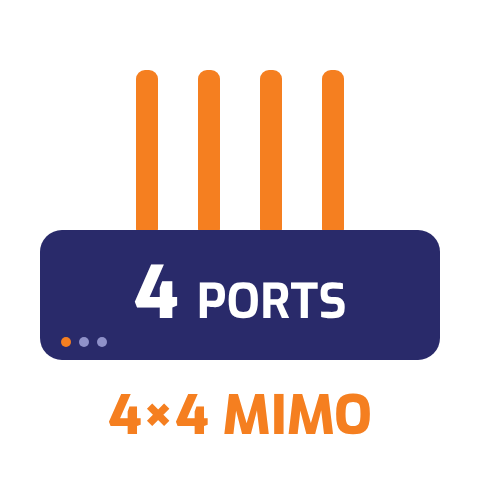
4 ports
Single modem, 4×4 MIMO. The basic setup on medium to large yachts.
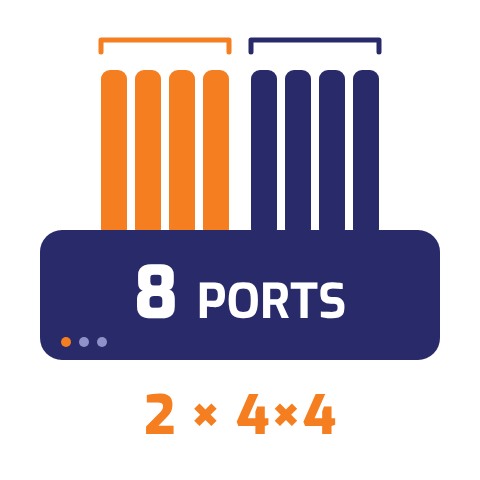
8 ports
Dual modem, 2 × 4×4. Two operators at once, for redundancy and capacity.
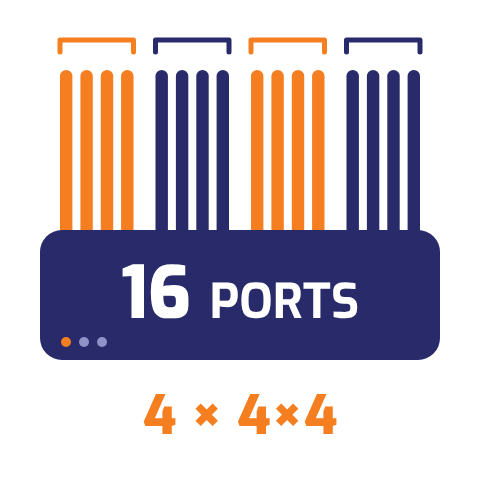
16 ports
Multi-modem (e.g. 4 × 4×4). Capacity at superyacht and megayacht scale.
Recommended Yacht Antennas for Large Yachts
All models are omni-directional and designed for marine conditions. Values are taken from the manufacturer's datasheets.
Router in the technical room

SWIRL-4
- Frequency617–6000 MHz
- Gain6 dBi (peak)
- Cellular4 ports · 4×4
- Extra portsWi-Fi · GNSS
SWIRL-8
- Frequency617–6000 MHz
- Gain6 dBi (peak)
- Cellular8 ports · 2 × 4×4
- Extra portsWi-Fi · GNSS
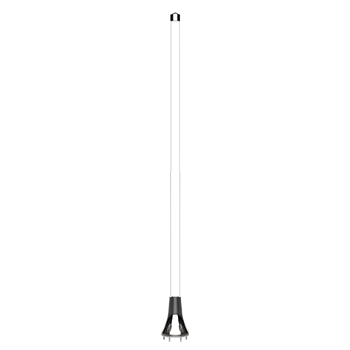
OMNI-0904 (Narwhal)
- Frequency617–4200 MHz
- Gain3.5 / 8 dBi (LTE)
- Cellular4 ports · 4×4
- PatternOmni
OMNI-0914 (Narwhal)
- Frequency617–4200 MHz
- Gain8 dBi (LTE)
- Cellular4 ports · 4×4
- PatternOmni
Router inside the antenna, and Wi-Fi

SWIRL-8-CPE
- Frequency617–6000 MHz
- Gain6 dBi (peak)
- Cellular8 ports · 2 × 4×4
- RouterInside the antenna
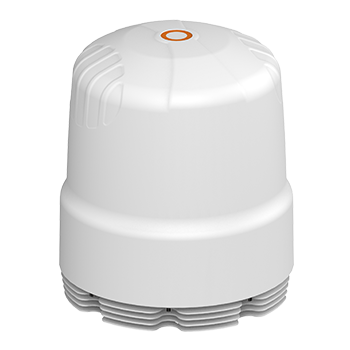
RIPPLE-8
- Frequency617–7200 MHz
- Gain9.5 dBi (LTE)
- Cellular8 ports
- Extra portsWi-Fi 8.5 dBi · GNSS

OMNI-494 · OMNI-498
- Frequency2400–7200 MHz
- Gain9.8 dBi (Wi-Fi)
- ConfigurationOMNI-498 2×2 · OMNI-494 4×4
- UseMarina Wi-Fi, Wi-Fi WAN
Which Yacht Antenna Is Right for You?
Single modem, router in the technical room
To combine cellular, Wi-Fi and GNSS in one antenna with a 4×4 MIMO 5G router. If only cellular and higher gain are needed, the Narwhal series.
SWIRL-4 · OMNI-0904 · OMNI-0914Dual modem, two operators
With an 8-port dual-modem router, to use two operators at once for redundancy and capacity.
SWIRL-8Long cable route
If the distance between the antenna and the technical room is long, the router goes into the antenna housing; only Ethernet / PoE runs into the yacht.
SWIRL-8-CPE · RIPPLE-8Marina Wi-Fi and Wi-Fi WAN
A separate marine Wi-Fi antenna to use marina Wi-Fi as an internet source in port or as a backup to the cellular link.
OMNI-494 · OMNI-498Yacht Antenna Comparison
| Model | Frequency | Gain | Cellular ports | Wi-Fi / GNSS | Router |
|---|---|---|---|---|---|
| SWIRL-4 | 617–6000 MHz | 6 dBi (peak) | 4 (4×4) | Yes | External |
| SWIRL-8 | 617–6000 MHz | 6 dBi (peak) | 8 (2 × 4×4) | Yes | External |
| OMNI-0904 | 617–4200 MHz | 3.5 / 8 dBi | 4 (4×4) | – | External |
| OMNI-0914 | 617–4200 MHz | 8 dBi | 4 (4×4) | – | External |
| SWIRL-8-CPE | 617–6000 MHz | 6 dBi (peak) | 8 (2 × 4×4) | Yes | Inside the antenna |
| RIPPLE-8 | 617–7200 MHz | 9.5 dBi | 8 | Yes | Inside the antenna |
Other Yacht Classes
For all yacht and commercial vessel applications, see the marine antenna selection guide.



Frequently Asked Questions About Yacht Antennas
Why use a dual-modem router and an 8-port antenna on a large yacht?
When does it make sense to put the router inside the antenna?
Will a yacht antenna also boost mobile phone signal in the cabins?
What is the difference between SWIRL and Narwhal (OMNI-09xx)?
Let's plan the right antenna system for your yacht
Share your yacht length, router and modem setup, technical room location and cruising area, and we will define the yacht antenna and system architecture for you.