
 OFFSHORE PLATFORMS
Offshore Platform Antenna: 4G/5G Connectivity Far from Shore
An offshore platform antenna has to reach shore-based base stations from tens of kilometres away. Offshore platforms, wind farms and other offshore installations operate far from the coast, and the height of the platform is a major advantage for cellular connectivity; with the right antenna type and position, a stable long-range link to shore can be established.
What Determines Connectivity on an Offshore Platform
A platform differs from a ship: it is usually fixed, very high, and its connectivity is critical to the safety of operations.
Height and range
The antenna's height above sea level extends the radio horizon; on platforms this means line of sight of up to 40–60 km from shore.
Fixed structure, directional antenna
On fixed platforms the direction of the base station is known. Directional antennas aimed at the shore deliver much higher gain than omni antennas.
Critical operations
SCADA, safety systems, cameras and personnel communication. The cellular link is designed with redundancy alongside the satellite link.
Harsh environment
High winds, salt water and constant UV. In areas with a hazardous zone (ATEX) classification, mounting location and equipment suitability are assessed separately.
Example: how platform height affects range
The radio horizon is approximately d (km) ≈ 4.12 × (√h₁ + √h₂), where h₁ and h₂ are antenna heights in metres.
Between an antenna 50 m high on a platform and a base station 40 m high on shore: 4.12 × (7.07 + 6.32) ≈ 55 km line of sight. For a boat antenna 3 m high and the same base station, this distance is about 33 km. Details: 4G/5G signal range at sea.
Antenna by Router Port Count
The antenna must match the number of cellular ports on the router. On critical platforms a dual modem for two operators is recommended.

2 ports
2×2 MIMO. Two directional antennas (horizontal + vertical polarisation) or a 2×2 omni antenna.
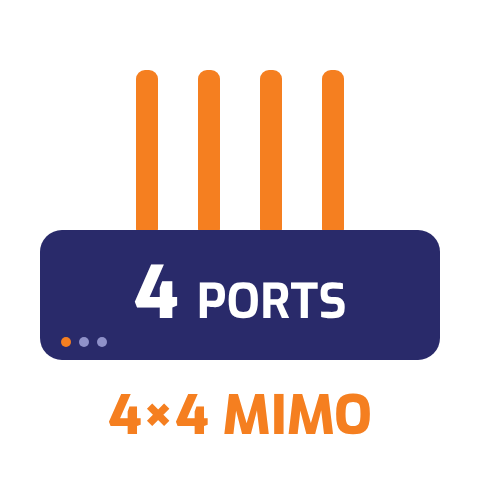
4 ports
4×4 MIMO. Higher capacity and a more stable connection at weak signal levels.
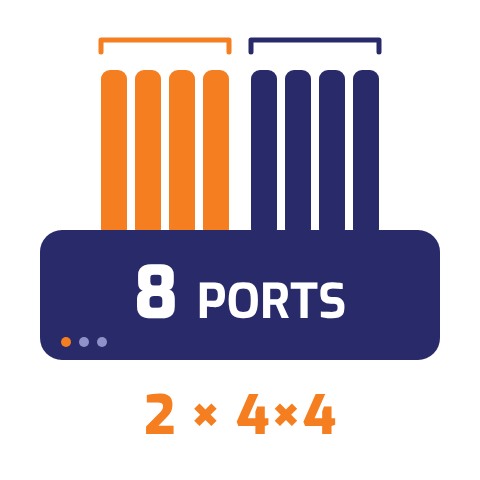
8 ports
Dual modem (2 × 4×4). Link redundancy with two operators.
Where Will the Router Be: Equipment Room or Inside the Antenna?
On offshore platforms the antenna is mounted at the highest open point, often far from the equipment room. The router's location determines cable length and RF loss, and is decided before the antenna model.
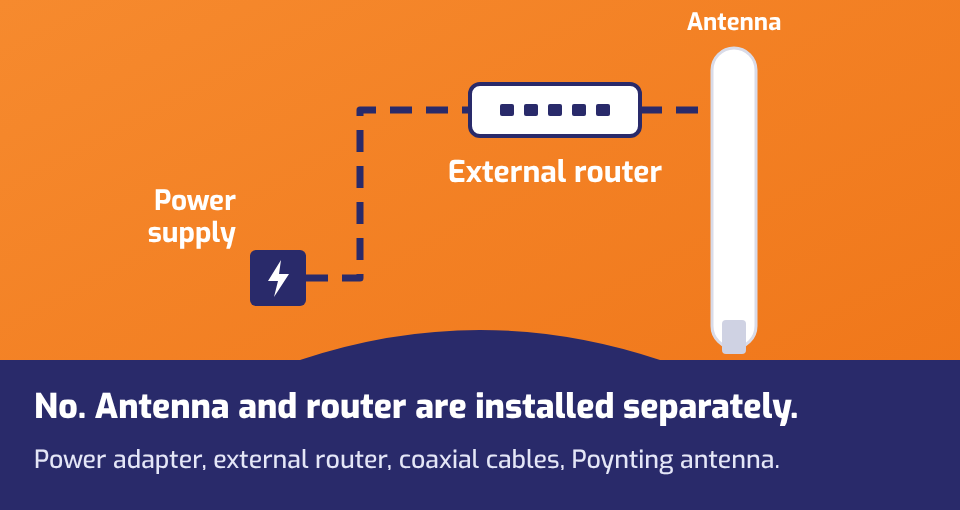
Router in the equipment room
Routers stay in the protected equipment room alongside SCADA and network infrastructure, with easy maintenance and SIM access. The antennas are connected by coaxial cables; keep the route short and use low-loss cable. Suitable antennas: 2 × LPDA-92 (fixed platforms), Narwhal OMNI-0902/0914, WaveHunter.
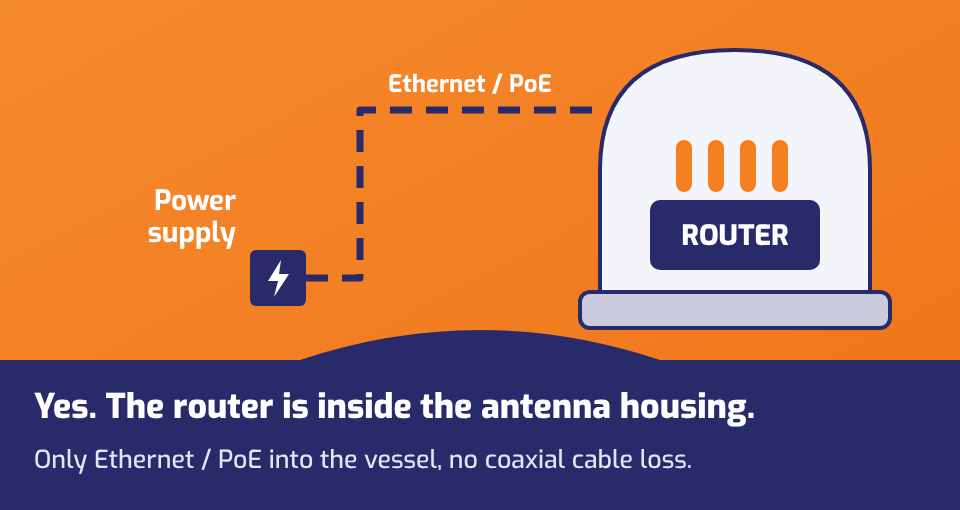
Router inside the antenna housing
When the cable run to the equipment room is long, the routers go into the antenna housing; only Ethernet / PoE runs into the facility and RF cable loss is practically eliminated. In hazardous (ATEX) areas, the housing location must be agreed with the facility's safety officers. Suitable antennas: RIPPLE-8, RIPPLE-16.
Recommended Offshore Platform Antennas
Directional antennas are preferred on fixed platforms; omni or multi-directional antennas on moving units (FPSO, jack-up, support vessels). Values are taken from the manufacturer's datasheets.
Fixed platforms: antenna aimed at the shore
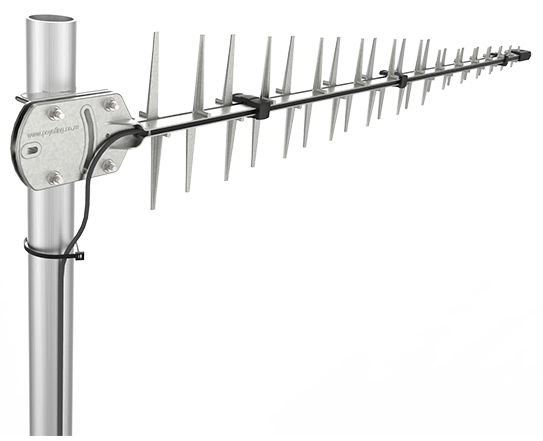
LPDA-92
- Frequency698–3800 MHz
- Gain11 dBi (peak)
- MIMO2 units, horizontal + vertical
- PatternDirectional, SISO
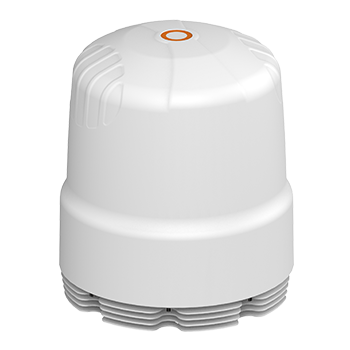
RIPPLE-8
- Frequency617–7200 MHz
- Gain9.5 dBi (LTE)
- Cellular8 ports
- RouterInside the antenna
RIPPLE-16
- Frequency617–7200 MHz
- Gain9.5 dBi (LTE)
- Cellular16 ports
- RouterInside the antenna
Moving units: omni and multi-directional antennas
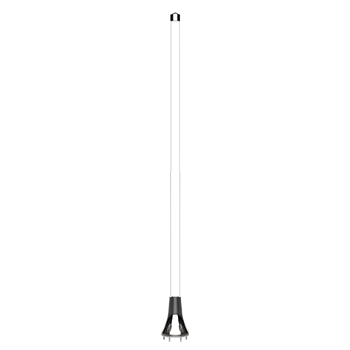
OMNI-0914 (Narwhal)
- Frequency617–4200 MHz
- Gain8 dBi (LTE)
- Cellular4 ports · 4×4
- PatternOmni
OMNI-0902 (Narwhal)
- Frequency617–4200 MHz
- Gain8 dBi (LTE)
- Cellular2 ports · 2×2
- PatternOmni
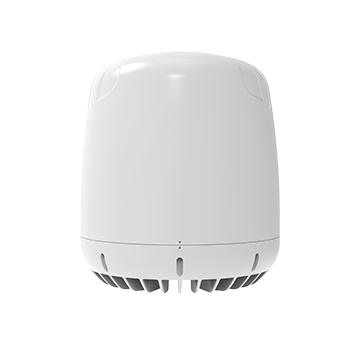
WaveHunter
- Frequency617–4200 MHz
- Gain11 dBi (LTE)
- Cellular6 × 4×4 (24 ports)
- UseFPSO, support vessels
Which Offshore Platform Antenna for Which Installation?
Fixed platform, known base station direction
2×2 MIMO with horizontal + vertical polarisation using two directional antennas aimed at the shore base station. Much higher gain than omni antennas.
2 × LPDA-92Long cable route, multiple modems
Router inside the antenna housing; only Ethernet / PoE runs into the facility. Dual or multi-modem for critical systems.
RIPPLE-8 · RIPPLE-16Wind farms and small platforms
A compact, high-gain omni antenna for SCADA and monitoring data on turbine and substation platforms.
OMNI-0902 · OMNI-0914FPSO and support vessels
A fixed directional antenna cannot be used on units whose heading changes; a multi-directional high-gain structure maintains access to distant base stations.
WaveHunter · OMNI-0914Offshore Platform Antenna Comparison
| Model | Pattern | Gain (LTE) | Cellular ports | Router | Suitable installation |
|---|---|---|---|---|---|
| LPDA-92 | Directional | 11 dBi | 1 (2 units for MIMO) | External | Fixed platform |
| RIPPLE-8 | Omni, X-pol | 9.5 dBi | 8 | Inside the antenna | Platform, FPSO |
| RIPPLE-16 | Omni, X-pol | 9.5 dBi | 16 | Inside the antenna | Large platform |
| OMNI-0902 | Omni | 8 dBi | 2 (2×2) | External | Wind farm |
| OMNI-0914 | Omni | 8 dBi | 4 (4×4) | External | Platform, support vessel |
| WaveHunter | Multi-directional, X-pol | 11 dBi | 24 (6 × 4×4) | External | FPSO, support vessel |
Antenna Installation on a Platform
- Align directional antennas to the base station direction determined by a site survey before installation.
- Mount the antenna at an open point where it will not be shadowed by the platform structure, cranes or other RF equipment.
- Choose mounting hardware for high wind loads and continuous vibration.
- In areas with a hazardous zone (ATEX) classification, determine the mounting location and equipment suitability together with the facility's safety officers.
- Use lightning arrestors and proper grounding on all antenna lines.
- More details: RF lightning arrestor · Fresnel zone and sea surface reflections
Other Commercial Marine Applications
For all yacht and commercial vessel applications, see the marine antenna selection guide.




Frequently Asked Questions About Offshore Platform Antennas
Should an offshore platform use a directional or an omni antenna?
How far from shore can 4G/5G be used on a platform?
How is MIMO set up with two directional antennas?
Does cellular connectivity replace satellite on an offshore installation?
Let's plan the connectivity setup for your installation
Share the platform type, distance to shore, antenna mounting height and critical systems, and we will define the antenna and router setup with a site survey.