
 PASSENGER AND CRUISE SHIPS
Passenger Ship Antenna:
Marine 4G/5G for Ferries and Cruise Ships
A passenger ship antenna has to serve hundreds, even thousands of people at the same time on ferries, fast ferries and cruise ships. A multi-modem 4G/5G setup for passenger internet, ticketing and payment systems, cameras and the crew network is designed together with onboard mobile coverage for passengers' phones.
Connectivity Needs on Passenger Ships
On ships carrying passengers, connectivity is part of both service quality and operations.
Many users
Passenger Wi-Fi needs capacity. Traffic is distributed by bonding links across multiple modems and operators.
Cellular as the main link on coastal routes
Most ferry and fast-ferry routes are within coverage; on these routes 4G/5G delivers higher capacity and lower latency than satellite.
Passenger phones
The steel hull and enclosed lounges weaken the mobile signal. An onboard cellular repeater system is needed for passengers' own phones.
Operational systems
Ticketing and payment (POS) systems, camera recording, fleet tracking and the crew network should run separately from passenger traffic and with priority.
Antenna by Router Port Count
The antenna must match the total number of cellular ports on the router or router group.
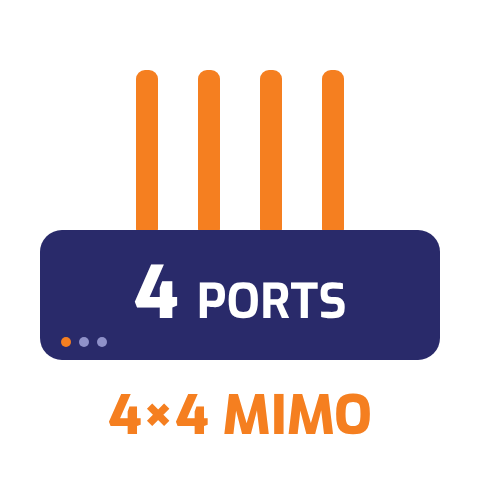
4 ports
Single modem, 4×4 MIMO. Small fast ferries on short routes.
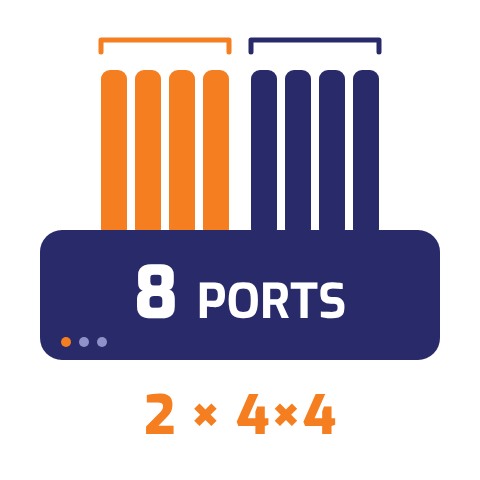
8 ports
Dual modem (2 × 4×4). Ferries; separating passenger and operational links.
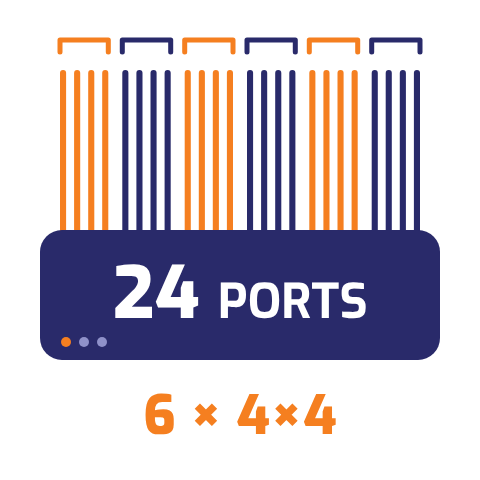
16–24 ports
Multi-modem (4–6 × 4×4). Cruise ships and large passenger vessels.
Where Will the Router Be: Technical Room or Inside the Antenna?
On ferries and cruise ships the antennas sit high on the bridge or mast, often far from the technical room. The router's location therefore determines cable length and RF loss, and is decided before the antenna model.
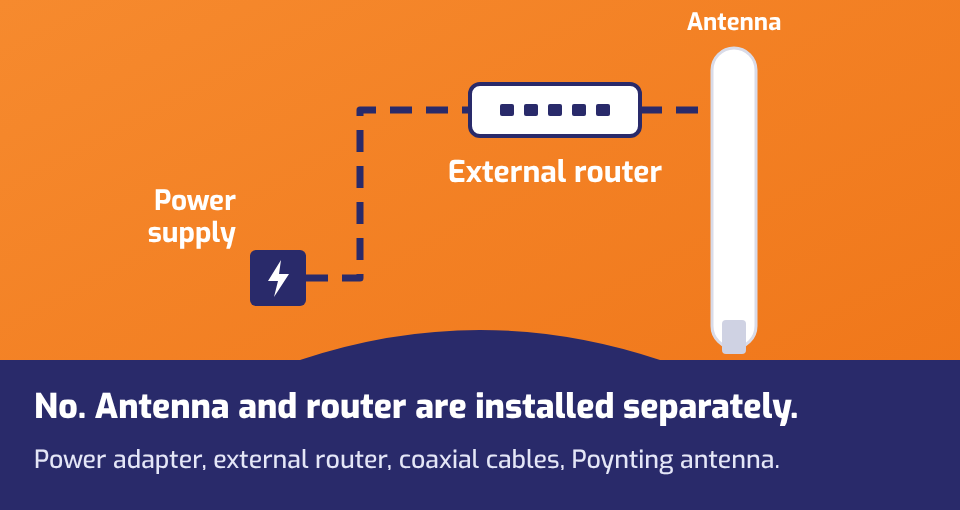
Router in the technical room
Modems for passenger Wi-Fi and operational systems are managed centrally indoors, with easy maintenance and SIM access. Each modem needs its own coaxial cable group; keep the route short and use low-loss cable. Suitable antennas: Narwhal OMNI-0914 (one per modem), SWIRL-8, WaveHunter.
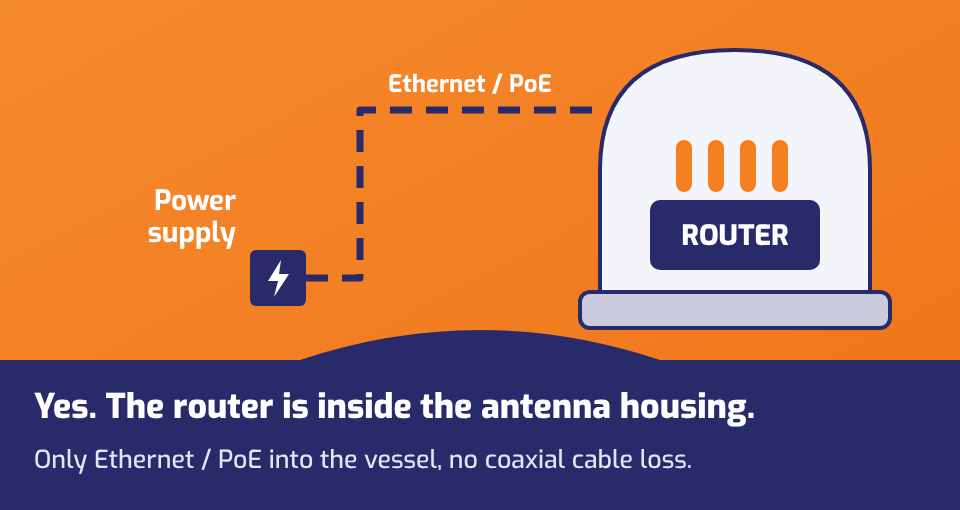
Router inside the antenna housing
On car ferries and cruise ships with a long cable run between the bridge and the technical room, the routers go into the antenna housing; only Ethernet / PoE runs inside and RF cable loss is practically eliminated. Remote SIM management becomes important. Suitable antennas: RIPPLE-8, RIPPLE-16.
Recommended Passenger Ship Antenna Solutions
Values are taken from the manufacturer's datasheets.
Ferries and fast ferries
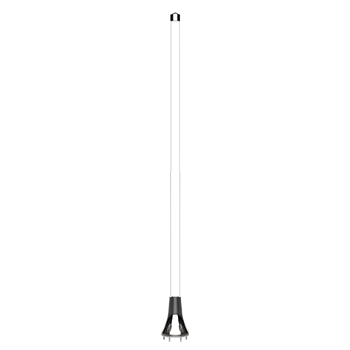
OMNI-0914 (Narwhal)
- Frequency617–4200 MHz
- Gain8 dBi (LTE)
- Cellular4 ports · 4×4
- UseOne antenna per modem

SWIRL-8
- Frequency617–6000 MHz
- Gain6 dBi (peak)
- Cellular8 ports · 2 × 4×4
- Extra portsWi-Fi · GNSS
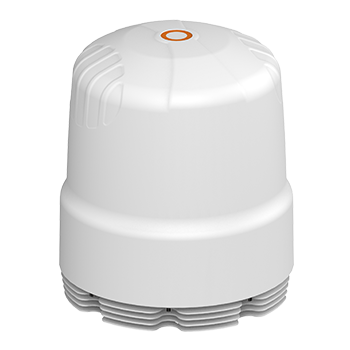
RIPPLE-8
- Frequency617–7200 MHz
- Gain9.5 dBi (LTE)
- Cellular8 ports
- RouterInside the antenna
Cruise ships and large passenger vessels
RIPPLE-16
- Frequency617–7200 MHz
- Gain9.5 dBi (LTE)
- Cellular16 ports
- Extra portsWi-Fi 8.5 dBi · GNSS
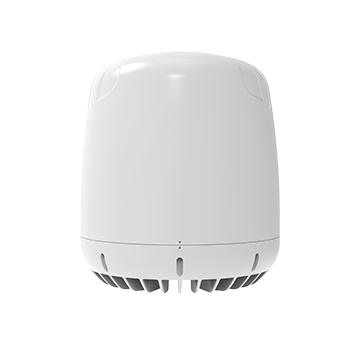
WaveHunter
- Frequency617–4200 MHz
- Gain11 dBi (LTE)
- Cellular6 × 4×4 (24 ports)
- Extra portsWi-Fi 7.5 dBi · GNSS

Stella Doradus Marine
- TechnologyGSM · 3G · 4G · 5G
- Bands700–2600 MHz
- ConfigurationiRepeater + LineAmp
- UsePhones in lounges and cabins
Which Passenger Ship Antenna for Which Vessel?
City and short-route fast ferries
The whole route is within coverage. Dual modem for passenger Wi-Fi and operational systems; one 4×4 antenna per modem.
OMNI-0914 · SWIRL-8Car ferries
If the distance between the bridge and the technical room is long, the router goes into the antenna housing; passenger and operational networks on separate modems.
RIPPLE-8Cruise ships and large passenger vessels
A high-capacity cellular link in port and coastal areas; satellite on the open sea. A 4–6 modem setup.
RIPPLE-16 · WaveHunterPhone signal in lounges and cabins
An onboard cellular repeater system, separate from the internet infrastructure, so passengers can make calls and use data on their own phones.
Stella Doradus MarinePassenger Ship Antenna Comparison
| Model | Frequency | Gain (LTE) | Cellular ports | Router | Suitable vessel |
|---|---|---|---|---|---|
| OMNI-0914 | 617–4200 MHz | 8 dBi | 4 (4×4) | External | Fast ferry |
| SWIRL-8 | 617–6000 MHz | 6 dBi (peak) | 8 (2 × 4×4) | External | Fast ferry, ferry |
| RIPPLE-8 | 617–7200 MHz | 9.5 dBi | 8 | Inside the antenna | Ferry |
| RIPPLE-16 | 617–7200 MHz | 9.5 dBi | 16 | Inside the antenna | Cruise ship, large passenger vessel |
| WaveHunter | 617–4200 MHz | 11 dBi | 24 (6 × 4×4) | External | Cruise ship, long route |
Antenna Placement on Passenger Ships
- Mount cellular antennas at the highest open point, such as the bridge roof or mast, outside the radar beam and away from VHF and satellite terminals.
- When a separate antenna is used per modem, leave sufficient separation between antennas and maintain isolation.
- Plan the external antennas for passenger internet and the cellular repeater's donor antenna separately.
- Run passenger Wi-Fi, operational systems and the crew network on separate networks with different priorities.
- Lightning arrestors on all antenna lines are recommended.
- More details: MIMO isolation · marine antenna installation · lightning protection for boats
Other Commercial Marine Applications
For all yacht and commercial vessel applications, see the marine antenna selection guide.




Frequently Asked Questions About Passenger Ship Antennas
Is satellite needed for passenger Wi-Fi on a ferry?
Are passenger Wi-Fi and passengers' phone signal the same system?
Are ticketing and payment systems affected by passenger internet?
How many modems does a cruise ship need?
Let's plan the connectivity setup for your vessel
Share your vessel type, route, passenger capacity and operational systems, and we will define the antenna, router and onboard coverage setup for you.