

Farming and Agriculture Antennas Reliable 4G/5G for Smart Farming
Farmhouse internet, greenhouse and irrigation automation, livestock barn cameras, field sensors and precision farming all depend on a reliable rural connection. Farming and agriculture antennas cover the Poynting solutions that deliver 4G/5G, Wi-Fi and GNSS connectivity at sites far from the base station.
- 617–7200 MHz
- 11 dBi directional
- Outdoor router enclosure
- Sensors and telemetry
- GNSS
Why is connectivity difficult in agriculture?
Long distances, wide areas
- The base station is kilometres away; signal level (RSRP) is low.
- Hills, trees and buildings block the line of sight.
- Over distance, low bands such as 700/800/900 MHz are decisive.
Scattered devices
- Sensors, pumps, valves and cameras are spread over a wide area.
- Most devices send little data, but must stay connected in all conditions.
- Dust, humidity, sun and impact put equipment under stress.
Where are they used on the farm and in the field?
Farmhouse and office
A directional XPOL or LPDA antenna for the 4G/5G router serving the house, office and guesthouse; an ePoynt enclosure when the router should sit outdoors.
FWA antenna selectionGreenhouse and irrigation
Pumps, valves and greenhouse controllers need little data but high availability. RS-232 or RS-485 devices are monitored remotely with an LTE Cat 1 modem.
RS-232 LTE Cat 1 modemSoil and climate sensors
Temperature, humidity, water level and soil data. A compact PUCK antenna for the sensor gateway; energy and power status are monitored too.
HW-Group sensor solutionsBarn and site cameras
Camera video needs high upload speed. A directional 4×4 antenna is combined with outdoor antennas that distribute Wi-Fi across the site.
4G camera monitoringGNSS and RTK
Auto-steering, seeding and spraying machines use RTK corrections and a quality GNSS antenna for centimetre-level positioning.
RTK GNSS solutionsWarehouse, barn and yard
Outdoor Wi-Fi antennas carry the main building's connection to the warehouse, barn and yard: 2.4 GHz for long range, 5 GHz for capacity.
Wi-Fi antennasWhich antenna for which situation?
The base station is far away, in one direction. XPOL-2-5G-V3 (2×2) or XPOL-24 (4×4), 11 dBi.
Very remote site, wide frequency range. Two LPDA-92 or LPDA-500 antennas for 2×2 MIMO with horizontal + vertical polarization.
The router should sit outdoors, next to the antenna. ePoynt enclosure; only Ethernet (PoE) runs into the building.
Good coverage, direction unclear. XPOL-1-5G+ or OMNI-0600 omnidirectional antenna.
Sensors, pumps, control cabinets. PUCK family: small, IP69K, cellular / Wi-Fi / GNSS.
Extend the connection to the barn and warehouse. OMNI-0702 … OMNI-0707 outdoor Wi-Fi antennas.
Measuring the site's RSRP, RSRQ and SINR values before installation makes the right choice easier.
Poynting agriculture antennas for farms
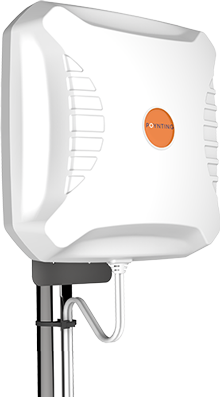
XPOL-2-5G-V3
Directional X-pol antenna for remote farms.
- 617–4200 MHz
- 11 dBi · 2×2 MIMO
- Pole, wall, window
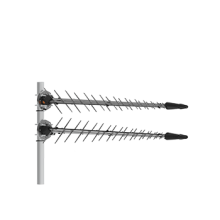
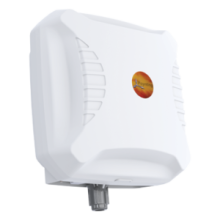
ePoynt
Antenna and router in the same outdoor enclosure.
- 617–4200 MHz
- Directional or omnidirectional
- 185 × 145 × 45 mm router
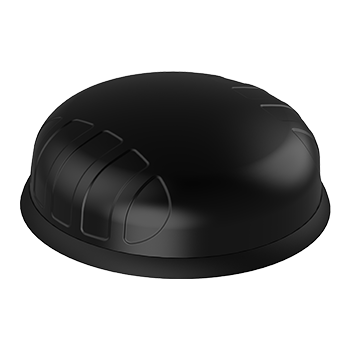
PUCK family
Compact, for sensors and cabinets.
- 617–6000 MHz
- Wi-Fi and GNSS options
- IP69K · 9 models
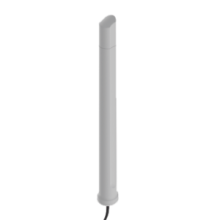
OMNI-0600
Wideband omnidirectional 2×2 antenna.
- 410–3800 MHz
- 6.2 dBi · 2×2 MIMO
- Pole and wall mount
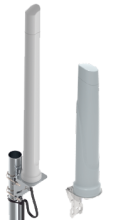
OMNI-0700 family
Outdoor Wi-Fi antennas.
- 2.4 GHz · 5 GHz · dual band
- 4 – 8 dBi
- 6 models: OMNI-0702 … 0707
Directional antennas Remote sites
| Model | Frequency | Peak gain | MIMO | Page / datasheet |
|---|---|---|---|---|
| XPOL-2-5G-V3 | 617–4200 MHz | 11 dBi | 2×2 | XPOL family |
| XPOL-24 | 617–4200 MHz | 11 dBi | 4×4 | Product page |
| LPDA-92 | 698–3800 MHz | 11 dBi | SISO | Product page |
| LPDA-500 | 617–7200 MHz | 11 dBi | SISO | Product page |
LPDA-92 was one of Poynting's first solutions for improving mobile signal on remote farms and is still widely used on rural farms today.
Omnidirectional antennas and ePoynt
| Model | Frequency | Peak gain | Pattern | MIMO | Page / datasheet |
|---|---|---|---|---|---|
| XPOL-1-5G+ | 410–6000 MHz | 6 / 7 dBi | Omni | 2×2 / 4×4 | Product page |
| OMNI-0600 | 410–3800 MHz | 6.2 dBi | Omni | 2×2 | Product page |
| EPNT-1 | 617–3800 MHz | 5 dBi | Omni | 2×2 / 4×4 | |
| EPNT-2 | 617–4200 MHz | 11 dBi | Directional | 2×2 | |
| EPNT-4 | 617–4200 MHz | 3 dBi | Omni | 4×4 | Product page |
Outdoor Wi-Fi antennas
| Model | Frequency | Peak gain | Use | Datasheet |
|---|---|---|---|---|
| OMNI-0702 | 2.4 GHz | 8 dBi | Long-range 2.4 GHz | |
| OMNI-0703 | 2.4 GHz | 4 dBi | Compact 2.4 GHz | |
| OMNI-0704 | 5 GHz | 4 dBi | Compact 5 GHz | |
| OMNI-0705 | 5 GHz | 7.5 dBi | Long-range 5 GHz | |
| OMNI-0706 | 2.4 – 6 GHz | 5.5 dBi | Dual band | |
| OMNI-0707 | 2.4 and 5 GHz | 5.5 dBi | Dual band |
Compact and GNSS antennas Sensors and machinery
| Model | Cellular | Wi-Fi | GNSS | Typical use | Page |
|---|---|---|---|---|---|
| PUCK-1 | SISO | – | – | Cat 1 / Cat M modem, sensors | View |
| PUCK-2 | 2×2 | – | – | Cabinet and control-panel routers | View |
| PUCK-4 | 2×2 | – | ✓ | Telemetry with location, machine tracking | View |
| PUCK-5 | 2×2 | ✓ | ✓ | Router + Wi-Fi + location in one antenna | View |
| GPS-1-V3 | – | – | ✓ | Location and timing only | Datasheet |
All PUCK models: PUCK family product comparison. GNSS antennas suitable for RTK in precision farming: RTK GNSS solutions.
Correct installation at rural sites
Height
The antenna must clear trees and buildings. In rural areas, a few metres of extra mast height can decide the connection.
Direction
Point the directional antenna at the base station and fine-tune it by measuring the direction that gives the best SINR.
Lightning protection
A mast in open land is the point most exposed to lightning. Grounding and a lightning arrestor on every cable are essential. Details: antenna lightning protection.
Cable
Keep the cable short and low-loss; on long runs, move the router closer to the antenna or use ePoynt. Details: LMR cable insertion loss.
Power
At pump and sensor points far from the grid, choose low-power modems and routers running on solar panels and batteries. A good signal also reduces power consumption.
Physical protection
Run cables through conduit to protect them from animals, machinery and weather; IP65–IP69K antennas withstand dust and high-pressure water.
About farming and agriculture antennas
Which antenna should I choose for farm internet?
If the base station is far away and its direction is known, a directional antenna (XPOL-2-5G-V3, XPOL-24 or LPDA). If the router supports 4×4, a 4×4 antenna delivers higher speeds. If the router should also be outdoors, an ePoynt enclosure is used.
Which connectivity suits field sensors?
For devices that send little data, such as sensors and pumps, LTE Cat 1 or Cat M modems are sufficient. Compact, rugged PUCK antennas mount easily on these devices' cabinets.
How do I get Wi-Fi to the barn and warehouse?
An outdoor Wi-Fi antenna is connected to the router in the main building or to a separate access point. 2.4 GHz (OMNI-0702) is preferred for long range, 5 GHz (OMNI-0705) for higher capacity.
Which GNSS antenna is used in precision farming?
Auto-steering and variable-rate applications need RTK corrections and a multi-band GNSS antenna with a stable phase centre for centimetre accuracy. Details are on the RTK GNSS solutions page.
Which frequencies matter in rural areas?
Over long distances, low bands such as 700, 800 and 900 MHz are decisive. The chosen antenna must deliver good gain in these bands; Poynting antennas cover from 617 MHz upwards.
Read more
For product information, you can also visit the official Poynting website.