

Transport and Mobility Antennas Uninterrupted 4G/5G on the Move
Bus, train, fleet vehicle, ambulance or caravan: in every moving vehicle, connectivity is challenged by the metal body, vibration and constantly changing base stations. Transport and mobility antennas combine cellular, Wi-Fi and GNSS in a single rugged housing, connecting the vehicle's router to the outside world.
- 617–7200 MHz
- 4×4 and 8×8 MIMO
- Cellular + Wi-Fi + GNSS
- IP69K
- Single-hole roof mount
Why is connectivity on the move difficult?
The vehicle itself
- Metal body: The cabin acts like a Faraday cage; the router's own antennas lose most of the signal.
- Vibration and impact: Connectors loosen and cheap antennas crack; wash tunnels apply high-pressure water.
- Many services: Cellular, passenger Wi-Fi and GNSS mean separate antennas, separate holes and separate cables.
The road and the network
- Constant handover: The base station changes as the vehicle moves; with a weak signal, the session drops.
- Variable coverage: Interference (low SINR) in the city, distant base stations on intercity roads.
- Signal from changing directions: As the vehicle turns, the direction of the base station changes too.
Which antenna for which vehicle?
Dual-modem 5G router, highest capacity. SWIRL: 8 cellular ports, Wi-Fi and GNSS in one housing; for buses, trains and caravans.
Roof combination antenna, standard vehicle. MIMO-4 series: 4×4 cellular, optional Wi-Fi and GNSS; 617–6000 MHz.
Router with two 5G modems, with Wi-Fi 7. MIMO-8 series: 8 cellular ports (2 × 4×4), optional 4×4 Wi-Fi, dual-band GNSS.
No holes can be drilled in the vehicle. PANL series: wideband panel antenna fixed to the window with suction cups or adhesive.
Small, impact-resistant, low profile. PUCK family: 9 models with cellular, Wi-Fi and GNSS options.
EN 50155 / EN 45545-2 certification required. Panorama transport antennas for rail projects.
The router's port count is decisive: choose a 2×2 antenna for a 2-port router, 4×4 for a 4-port router and an 8-port (2 × 4×4) antenna for an 8-port router with two 5G modems. To evaluate the signal in the field, see the RSRP, RSRQ and SINR guide.
Select your vehicle type, your router's cellular, Wi-Fi and GNSS port counts and the mounting style; matching Poynting antennas are listed instantly.
Poynting transport and mobility antennas
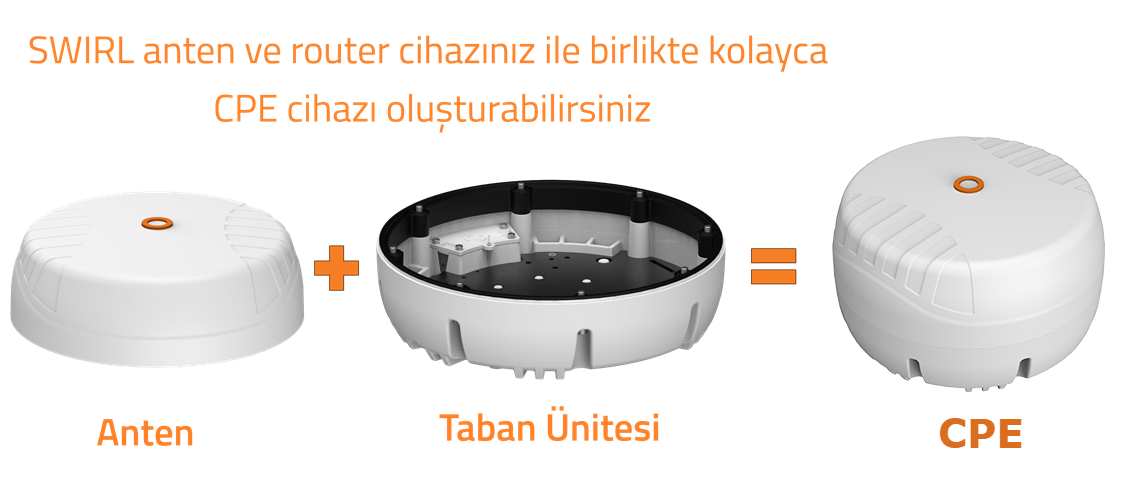
SWIRL
Combination vehicle antenna for dual-modem 5G routers.
- 8×8 cellular MIMO
- Wi-Fi + GNSS included
- IP69K · IK08
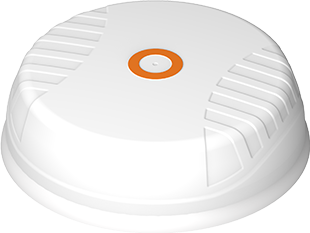
MIMO-8 series
8-port roof antenna for two 5G modems.
- 410–6000 MHz · 8.3 dBi
- 4×4 Wi-Fi 7 (841)
- IP69K · IK10
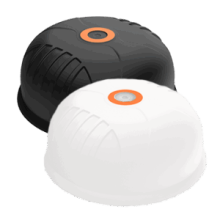
MIMO-4 series
4×4 cellular combination roof antenna.
- 617–6000 MHz · 6 dBi
- Wi-Fi and GNSS options
- 5 models · IP69K
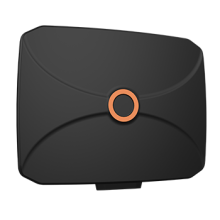
PANL series
Window-mounted panel antenna, no drilling required.
- 410–6000 MHz
- 4×4 and 6×6 MIMO
- Suction-cup or adhesive mount
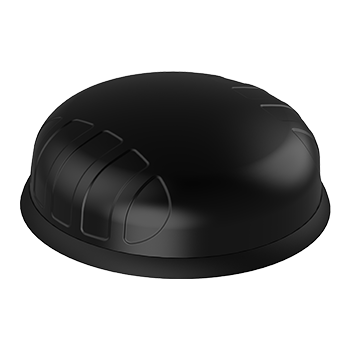
PUCK family
Compact, low-profile, impact resistant.
- 617–6000 MHz cellular
- Wi-Fi and GNSS options
- 9 models · IP69K
MIMO-4 series 617–6000 MHz
| Model | Cellular | Wi-Fi | GNSS | Gain (cellular) | Datasheet |
|---|---|---|---|---|---|
| MIMO-4-4 V2 | 4×4 | – | – | 6 dBi | |
| MIMO-4-14 V2 | 4×4 | – | ✓ | 6 dBi | |
| MIMO-4-15 | 2×2 | 2×2 | ✓ | 6 dBi | |
| MIMO-4-17 V2 | 4×4 | 2×2 | ✓ | 6 dBi | |
| MIMO-4-19 V2 | 4×4 | 4×4 | ✓ | 6 dBi |
Wi-Fi: 2.4 GHz and 5–7.2 GHz (Wi-Fi 6E), 6.5 dBi. To compare the models side by side: MIMO-4 comparison tool.
MIMO-8 series 410–6000 MHz
| Model | Cellular | Wi-Fi | GNSS | Gain (cellular) | Datasheet |
|---|---|---|---|---|---|
| MIMO-8-801 | 8 port (2 × 4×4) | – | L1 + L5 | 8.3 dBi | |
| MIMO-8-841 | 8 port (2 × 4×4) | 4×4 | L1 + L5 | 8.3 dBi |
Wi-Fi: 2.4 GHz and 5–7.2 GHz (Wi-Fi 6E/7), up to 9.3 dBi. Ø268 × 85 mm, black or white. Details: Poynting MIMO-8.
PANL series Window mount
| Model | Frequency | Cellular | Peak gain | Page / datasheet |
|---|---|---|---|---|
| PANL-401 | 410–6000 MHz | 4×4 | 7.8 dBi | Product page |
| PANL-431 | 410–6000 MHz | 4×4 | 7.8 dBi | Product page |
| PANL-631 | 617–6000 MHz | 6×6 | 6 dBi |
In addition to cellular, PANL-631 carries 3 Wi-Fi ports (2.4 / 5 / 6 GHz) and a dual-band GNSS port; IP65.
PUCK family Compact
| Model | Cellular | Wi-Fi | GNSS | Gain (cellular) | Page |
|---|---|---|---|---|---|
| PUCK-1 | SISO | – | – | 5.5 dBi | View |
| PUCK-2 | 2×2 | – | – | 6.5 dBi | View |
| PUCK-3 | SISO | ✓ | ✓ | 5.5 dBi | View |
| PUCK-4 | 2×2 | – | ✓ | 6.5 dBi | View |
| PUCK-5 | 2×2 | ✓ | ✓ | 6.5 dBi | View |
| PUCK-7 | 2×2 | ✓ | – | 6.5 dBi | View |
| PUCK-8 | 2×2 | ✓ | – | 6.5 dBi | View |
| PUCK-12 | – | 2×2 | – | 7.5 dBi (Wi-Fi) | View |
To compare all models side by side, including the multi-Wi-Fi-port PUCK-14: PUCK family product comparison. Active GNSS antenna for positioning only: GPS-1-V3 datasheet.
Correct installation on the vehicle
Centre of the roof
Place the antenna in the centre of the metal roof, away from air conditioning and other equipment. The metal roof acts as a ground plane and improves the radiation pattern.
Open sky
The GNSS element needs an unobstructed view of the sky; do not leave the antenna in the shadow of tall body parts.
Short cable
Position the router as close to the antenna as possible. Long coaxial cable causes significant loss, especially at 3.5 GHz and above. Details: LMR cable insertion loss.
Port mapping
Connect the cellular ports to the router's main and diversity inputs in order; do not mix up the Wi-Fi and GNSS cables.
Sealing
On a single-hole mount, tighten the gasket and nut to the manufacturer's torque. The IP69K housing withstands high-pressure water in wash tunnels.
Dual SIM, dual modem
Using two operators on intercity routes closes coverage gaps; an 8×8 antenna delivers full performance with a dual-modem router.
Solutions by vehicle type
About transport and mobility antennas
Why are omnidirectional rather than directional antennas used on vehicles?
As the vehicle moves and turns, the direction of the base station changes constantly. A directional antenna faces a fixed direction, so it is not suitable for vehicles; an omnidirectional antenna receives signal from every direction.
What does a combination antenna (cellular + Wi-Fi + GNSS) offer?
All services are in one housing, mounted through a single hole. That means fewer holes in the vehicle body, fewer sealing points and tidier cabling.
My router has 2 ports. Can I use a 4×4 antenna?
Yes; cap the unused ports. However, to see the speed advantage of 4×4 you need a router with 4 cellular antenna inputs. On combination antennas, the Wi-Fi and GNSS ports are used separately.
What does IP69K mean?
Complete protection against dust and resistance to close-range, high-pressure, high-temperature water jets. It matters for buses and trucks that go through wash tunnels.
Which antenna for trains and trams?
Rail systems require compliance with EN 50155 (railway electronics) and EN 45545-2 (fire safety). For these projects, see Panorama transport antennas.
Read more
For product information, you can also visit the official Poynting website.