

Mining and Tunnel Antennas Uninterrupted Wi-Fi and LTE Underground
In underground mines and tunnels, communication is vital for voice, personnel and vehicle tracking, remote machine control and worker safety. Mining and tunnel antennas cover the circularly polarized HELI series designed for these harsh environments, the EPNT-7 mesh antenna and rugged OMNI and PUCK antennas.
- Circular polarization
- 2.4 / 5 GHz Wi-Fi
- 698–7200 MHz
- Intrinsically safe (IS)
- IP65 – IP69K
Why is communication difficult in mines and tunnels?
Propagation along the tunnel
- The signal travels along the tunnel axis and fades quickly at bends and intersections.
- Rock walls reflect the signal repeatedly, causing multipath propagation and polarization rotation.
- As vehicles and equipment move along the line, the line of sight is constantly interrupted.
The mining environment
- Dust, humidity, water and constant vibration put equipment under stress.
- Blasting and vehicle traffic expose the antenna to physical impact.
- Mines with firedamp risk require equipment suitable for explosive atmospheres.
Why a helical antenna?
Resistant to reflections
A circularly polarized wave loses less than a linearly polarized one as it reflects off rock walls, giving a more stable link in a multipath environment.
Independent of device orientation
The angle of the antenna on a handheld terminal, cap lamp or vehicle changes constantly. Circular polarization is less sensitive to this angle difference.
Focused on the tunnel axis
A directional helical antenna directs energy along the tunnel, so a longer stretch is covered with the same access point.
In detail: Poynting circularly polarized mining antennas.
Which antenna at which point?
Tunnel entrances and end points. Radiates in one direction along the tunnel: HELI-41, HELI-21, HELI-3.
Access point in mid-tunnel. Radiates in both directions at once: HELI-42, HELI-22, HELI-8.
High capacity, Wi-Fi 6. Dual-band 2×2 / 4×4 HELI-41 and HELI-42.
Private LTE or operator coverage. HELI-6 (698–960 MHz), HELI-5 (1710–2170 MHz), HELI-31 (1700–7200 MHz).
Firedamp and explosive atmospheres. Intrinsically safe HELI-3-IS, HELI-4-IS, HELI-8-IS; certification details in the datasheet.
Mobile machinery and open pits. EPNT-7: an IP69K antenna housing a Rajant mesh node.
Poynting mining and tunnel antennas
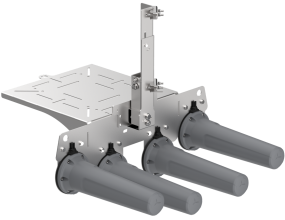
HELI series
Circularly polarized helical antennas.
- 2.4 / 5 GHz and LTE
- Unidirectional and bidirectional
- 20 models · IS versions
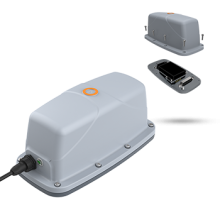
EPNT-7
Rugged antenna for a Rajant mesh node.
- 4×4 Wi-Fi · 2.4 / 5–6 GHz
- Optional GNSS
- IP69K · IK08 · PoE
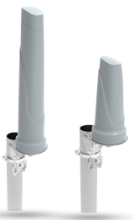
OMNI-0700 family
Omnidirectional, rugged Wi-Fi antennas.
- 2.4 GHz · 5 GHz · dual band
- 4 – 8 dBi
- BRKT-51 mining bracket
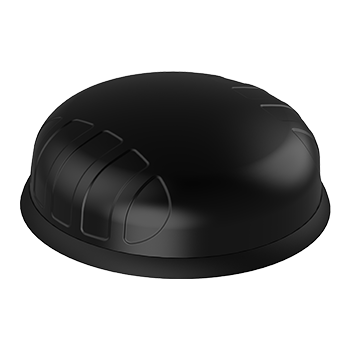
PUCK family
Compact, for mining vehicles and machinery.
- Cellular, Wi-Fi, GNSS
- IP69K, impact resistant
- 9 models
HELI series Circular polarization
| Model | Frequency | Peak gain | Pattern | Ports | Datasheet |
|---|---|---|---|---|---|
| 2.4 GHz | |||||
| HELI-3 | 2400–2500 MHz | 17.5 dBi | Unidirectional | SISO | |
| HELI-4 | 2400–2500 MHz | 14.5 dBi | Unidirectional | SISO | |
| HELI-11 | 2400–2500 MHz | 12 dBi | Unidirectional | SISO | |
| HELI-8 | 2400–2500 MHz | 14 dBi | Bidirectional | SISO | |
| HELI-17 | 2400–2500 MHz | 9 dBi | Bidirectional | SISO | |
| 5 GHz | |||||
| HELI-12 | 5000–6000 MHz | 13 dBi | Unidirectional | SISO | |
| HELI-18 | 5000–6000 MHz | 11 dBi | Bidirectional | SISO | |
| 2.4 + 5 GHz (dual band) | |||||
| HELI-41 | 2400–6000 MHz | 13 dBi | Unidirectional | 2×2 / 4×4 | |
| HELI-21 | 2400–6000 MHz | 13 dBi | Unidirectional | 2×2 | |
| HELI-13 | 2400–6000 MHz | 13 dBi | Unidirectional | SISO (dual feed) | |
| HELI-42 | 2400–6000 MHz | 11 dBi | Bidirectional | 2×2 / 4×4 | |
| HELI-22 | 2400–6000 MHz | 11 dBi | Bidirectional | 2×2 | |
| HELI-19 | 2400–6000 MHz | 11 dBi | Bidirectional | SISO (dual feed) | |
| HELI-40 | 2400–6000 MHz | 4.8 dBi | Bidirectional | 2×2 | |
| Cellular (LTE / 5G) | |||||
| HELI-6 | 698–960 MHz | 13.5 dBi | Unidirectional | SISO | |
| HELI-5 | 1710–2170 MHz | 16 dBi | Unidirectional | SISO | |
| HELI-31 | 1700–7200 MHz | 9 dBi | Unidirectional | SISO | |
| Intrinsically safe (IS) versions | |||||
| HELI-3-IS | 2400–2500 MHz | 17.5 dBi | Unidirectional | SISO | |
| HELI-4-IS | 2400–2500 MHz | 14.5 dBi | Unidirectional | SISO | |
| HELI-8-IS | 2400–2500 MHz | 14 dBi | Bidirectional | SISO | |
IS versions are intrinsically safe designs; see the relevant datasheet for explosive-atmosphere certification and conditions of use. All HELI antennas are rated IP65.
OMNI-0700 family Wi-Fi
| Model | Frequency | Peak gain | Use | Datasheet |
|---|---|---|---|---|
| OMNI-0702 | 2.4 GHz | 8 dBi | Long-range 2.4 GHz | |
| OMNI-0703 | 2.4 GHz | 4 dBi | Compact 2.4 GHz | |
| OMNI-0704 | 5 GHz | 4 dBi | Compact 5 GHz | |
| OMNI-0705 | 5 GHz | 7.5 dBi | Long-range 5 GHz | |
| OMNI-0706 | 2.4 – 6 GHz | 5.5 dBi | Dual band | |
| OMNI-0707 | 2.4 and 5 GHz | 5.5 dBi | Dual band |
All PUCK models: PUCK family product comparison.
Correct installation underground
Align with the tunnel axis
Mount the directional antenna in the middle of the tunnel, close to the roof and facing parallel to the tunnel axis.
Plan for bends
Line of sight is lost at a bend; plan a separate access point or a new antenna direction for every bend and intersection.
Same polarization
Use circular polarization with the same sense of rotation (right- or left-hand) on all antennas along the line.
Physical protection
Position antennas clear of vehicle and machine traffic, at a height where they will not be struck; use brackets.
Cable and connectors
Protect connectors against moisture and dust with sealing tape; keep the cable short and secured. Details: LMR cable insertion loss.
Measure on site
Measure signal level and quality along the line before and after installation to identify coverage gaps.
About mining and tunnel antennas
Why are circularly polarized antennas used in tunnels?
The polarization of a signal reflecting off rock walls changes and multipath propagation occurs. Circular polarization is less sensitive to this change and to the device angle, so it gives a more stable link in a tunnel.
What is the difference between unidirectional and bidirectional HELI antennas?
A unidirectional antenna radiates in one direction along the tunnel and is used at entrances and end points. A bidirectional antenna radiates in two opposite directions and, with an access point placed mid-tunnel, covers both sides.
Which antenna is used in explosive atmospheres?
Intrinsically safe (IS) HELI versions are available for mines with firedamp risk. Certification and conditions of use must be verified per project against the datasheet and applicable regulations.
Can LTE be used in a mine?
Yes. Cellular helical antennas such as HELI-6, HELI-5 and the wideband HELI-31 are used to bring private LTE or operator coverage underground.
What is the EPNT-7 for?
The EPNT-7 is an IP69K enclosure that houses a Rajant mesh node and has a 4×4 dual-band Wi-Fi antenna. It is used to build self-healing wireless networks on mobile mining machinery and in open pits.
Read more
For product information, you can also visit the official Poynting website.