

Stella Doradus Operator Network Protection and RF Control Functions
Stella Doradus operator network protection uses automatic RF control functions to manage repeater gain and RF output according to site conditions. The objective is to improve indoor mobile coverage while limiting unnecessary RF energy toward the operator network, instability caused by feedback and unsuitable gain conditions.
The protection structure can be considered through four main functions: oscillation / interference detection, automatic gain control, uplink shutdown and base-station proximity control.
1. Stella Doradus Operator Network Protection: Oscillation / Interference Detection
If sufficient RF isolation is not provided between the outdoor donor antenna and the indoor service antenna, part of the repeater output can be received again by the donor antenna. This feedback increases the risk of oscillation when system gain approaches or exceeds the isolation between the antennas.
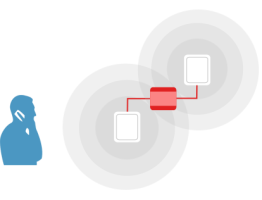
How Does RF Feedback Occur?
RF feedback can occur when donor and service antennas are installed too close to one another, face each other along the same path or when the building structure does not provide sufficient attenuation between the antennas.
How Does the Repeater Respond?
When oscillation or feedback conditions are detected, the Stella Doradus repeater can automatically reduce system gain to help maintain stable operating conditions.
Basic Installation Rule
RF isolation between donor and service antennas should be greater than the planned repeater gain, with an additional safety margin appropriate for the installation.
2. Automatic Gain Control
Within Stella Doradus operator network protection, Automatic Gain Control (AGC) continuously monitors repeater input and operating conditions and adjusts gain when required. This helps limit excessive RF power toward the base station and protects the repeater from unsuitable high-level operating conditions.
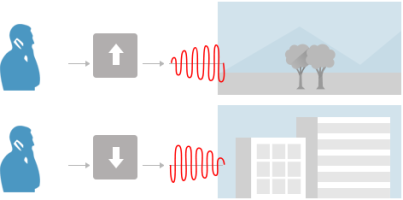
Why Is Gain Adjusted Automatically?
Donor signal level can change according to site conditions. When the input level increases, AGC reduces repeater gain to keep RF output within a controlled operating range.
RF Power Control Toward the Base Station
In mobile networks, RF power between the handset and the base station is dynamically managed. The repeater's automatic gain control works with this environment by limiting unnecessarily high uplink levels.
Operation According to Site Conditions
AGC behaviour is not based on one fixed gain value. Signal level at the donor antenna, antenna gain, cable loss and the frequency band in use all affect the actual repeater operating point.
3. Uplink Shutdown
As part of Stella Doradus operator network protection, the repeater can limit uplink RF transmission when there is no active call or data session. When user traffic begins, the uplink path becomes active again.
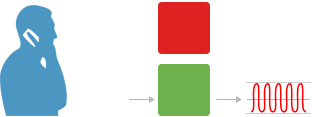
Uplink Control in Standby
When there is no active user traffic through the repeater, reducing unnecessary uplink RF transmission helps limit additional RF noise that could otherwise be presented toward the base station.
Automatic Activation During Calls or Data Sessions
When a voice call or mobile-data session begins, the repeater automatically activates the required uplink path so that user traffic can be carried toward the base station.
Benefit for the Operator Network
Keeping uplink transmission active only when required helps reduce unnecessary RF noise, particularly in environments where many repeaters are installed, and supports a more controlled RF environment on the network side.
4. Base-Station Proximity Control
Stella Doradus repeaters continuously monitor RF levels on the donor side and adjust operating gain according to site conditions. Higher gain may be used where donor signal is weak, while gain and RF output are automatically limited where a strong signal is received from the base station.
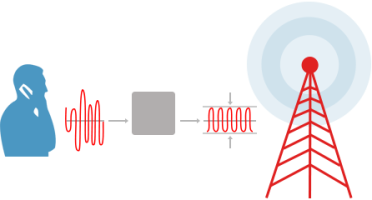
Weak Donor-Signal Conditions
At sites far from the base station or where outdoor donor signal is weak, the repeater can use the required gain within system limits to help provide indoor mobile coverage.
Strong Donor-Signal Conditions
At sites close to the base station or where donor signal level is high, the system automatically reduces gain to avoid unnecessarily high gain and RF output.
Continuous RF-Level Analysis
This control is not based on a fixed physical distance measured in kilometres. The repeater operating point is continuously evaluated according to the RF levels measured at the site and the current system conditions.