Operator Protection
Helps verify that the installed repeater system is not generating harmful uplink interference toward nearby operator base stations.

Sentinel
Repeater Uplink Monitoring
GSM | 3G | 4G | 5G
B1 | B3 | B8 | B7 | B20 | B28

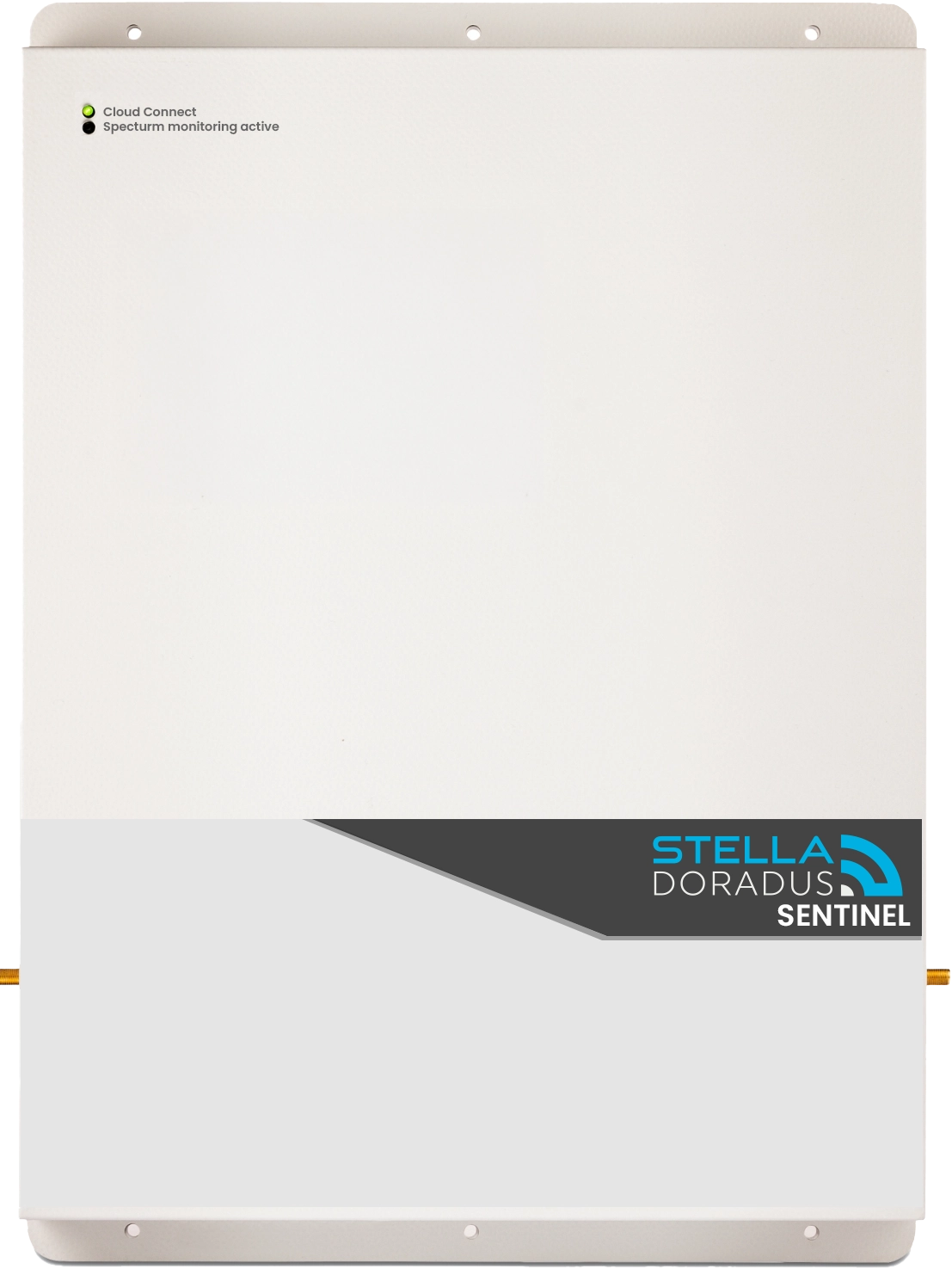
Stella Doradus Sentinel is a professional RF monitoring device designed to continuously supervise uplink noise generated by an installed repeater system and its connected antennas. Its purpose is to help ensure that the building's repeater installation does not create harmful interference toward mobile operator base stations.
Stella Doradus Sentinel combines continuous spectrum monitoring, automatic alerts, spectrum history and remote cell scanning. It is not a cellular repeater itself; it is a complementary monitoring tool used after installation to supervise RF behaviour, uplink noise and network conditions over time.
Sentinel is positioned as a post-installation RF supervision device. It monitors the behaviour of the installed repeater system and helps technical teams protect the operator network from excessive uplink noise or abnormal RF activity.
Helps verify that the installed repeater system is not generating harmful uplink interference toward nearby operator base stations.
Continuously monitors uplink spectrum and detects RF noise or abnormal activity above acceptable thresholds.
Provides ongoing RF visibility so repeater behaviour and exterior network conditions can be assessed after commissioning.
Monitors the supported cellular bands used by different mobile operators within the installation's RF environment.
Detected anomalies can be logged and used to trigger notifications, giving support teams a recorded view of suspicious spectrum activity.
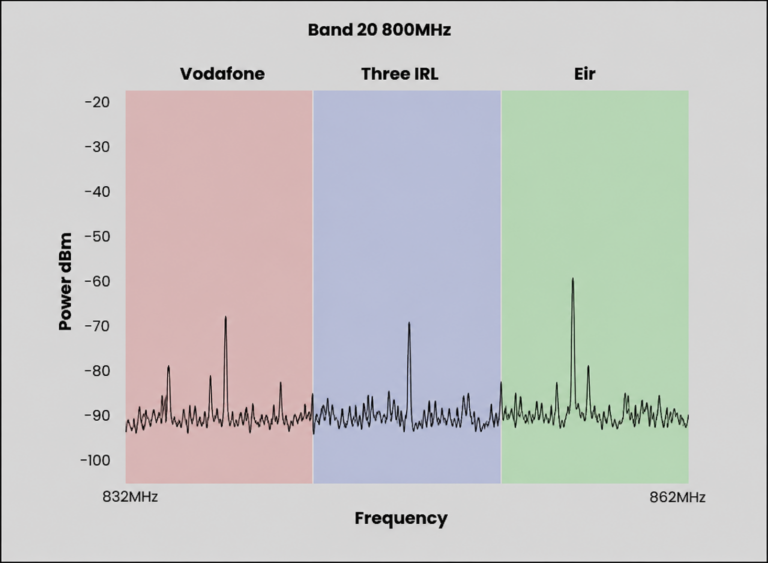
Stella Doradus Sentinel monitors the uplink spectrum across B28, B20, B8, B3, B1 and B7. In manual mode, a selected band can be viewed live. In automatic mode, the supported bands are monitored continuously.
When the monitoring algorithm detects uplink noise above the defined threshold, the relevant spectrum data can be stored and buffered for later analysis through StellaControl. An anomaly can also trigger an e-mail alert containing a recorded segment of the suspicious spectrum activity.
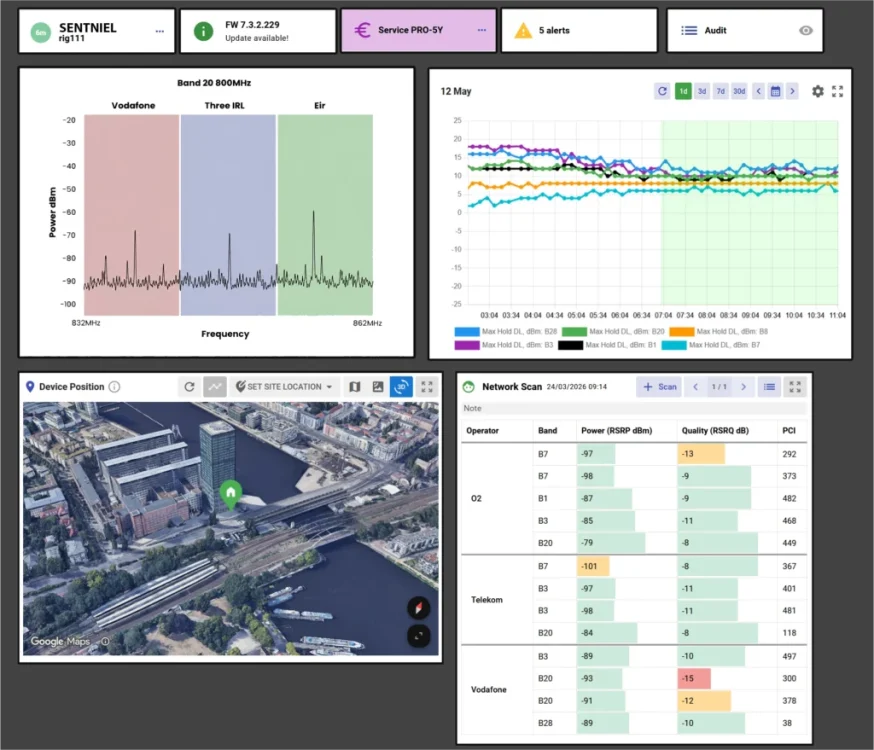
The Sentinel dashboard brings together spectrum information, device status, location data and network-scan results. This gives installers and technical teams a central operational view of the installed system and the surrounding cellular RF environment.
Historical data can be reviewed alongside current measurements, helping teams determine whether a change is linked to repeater settings, antenna isolation, exterior network conditions or another RF source.
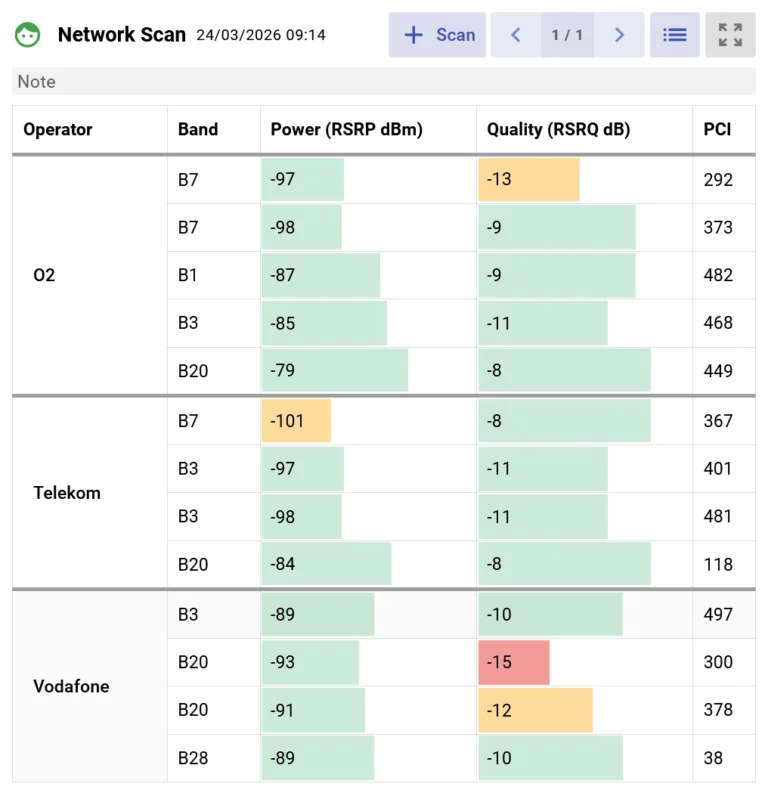
Stella Doradus Sentinel includes an internal modem and embedded SIM for periodic automatic cell scanning. Nearby cells can be reviewed by operator and band together with signal power and quality values, providing additional visibility of the donor-side RF environment.
This allows technical teams to compare repeater behaviour with changes in the exterior network and to confirm whether the incoming cellular environment remains suitable for the installed repeater system.
SHARK and Sentinel perform different but complementary roles in a professional indoor cellular coverage project.
SHARK is used before or during installation to analyse the RF environment, support site surveys and help determine donor-signal conditions, antenna positions and repeater-system design.
Sentinel is used after installation to continuously supervise uplink spectrum, detect abnormal RF noise, record events and help confirm that the installed repeater system remains stable and operator-friendly.
Large buildings, hotels, factories, shopping centres and multi-antenna RF-distribution systems require more than indoor coverage alone. Uplink noise, antenna isolation and repeater operating conditions also affect the operator network.